Computer Entertainer, a Game Magazine from the 1980s, is Available to Everyone Thanks to the VGHF

Aside from the venerable Edge and the recently-relaunched Game Informer, it’s hard to find dedicated game magazines at your favorite bookstore in 2025. But even though they’re long gone, we’re not short of nostalgic odes to defunct titles like Nintendo Power or GamePro or Electronic Gaming Monthly.

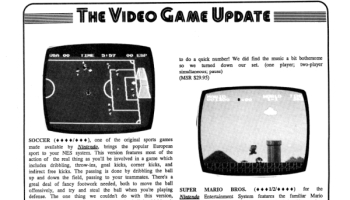
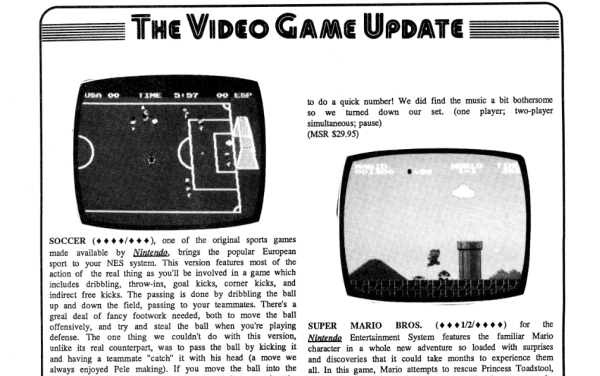
Computer Entertainer doesn’t have the name recognition of any of those periodicals, but maybe it should, because no one was covering games like they were in the 1980s. And I mean that literally. It was published from 1982 until 1990 by Marylou Badeaux and Celeste Dolan, sisters who also ran a video game store. There were other game magazines available in the 1980s, but from 1984 until 1987, Computer Entertainer was (most likely) the only magazine available in the United States that was solely dedicated to video games.

So why are we talking about this now? Well, the Video Game History Foundation has acquired the rights to Computer Entertainer and they’re making available to anyone, for free, through a Creative Commons license. That means that as long as you give credit to the VGHF, you can use articles from Computer Entertainer however you want.

I’ll let them explain.
[Continue Reading…]

The Video Game History Foundation’s Research Library is Now Open

Work had already begun on the Video Game History Foundation’s Research Library when it was first announced in December 2023, but the VGHF team has spent the last year making their online presence even better, diligently cataloging and scanning many of the materials available in their collection.

But the time has finally come, and beginning today, the Research Library is now open to all.

Though it’s officially in “Early Access”, the Video Game History Foundation Library (available at library.gamehistory.org) is a searchable catalog of the VGHF’s holdings. That includes magazines, newsletters, development documents, correspondence, commercials, and more. Best of all, material from the collection that’s been digitized can be viewed online from anywhere for free through the Digital Archive (archive.gamehistory.org).

This is an amazing resource for researchers or anyone who wants to learn more about games. For example, did you know Nintendo’s Rad Racer was originally going to be titled 3-D Racer? I didn’t, but I do now after digging through Nintendo’s Publicity Folder from CES 1987. Thousands of little tidbits of information just like that are waiting for you in the Video Game History Foundation’s Research Library.

Discover even more of what this (virtual) space offers with Library Director Phil Salvador in the video below:

I’m very excited to dive in to the Research Library and you can learn more about it on the Video Game History Foundation Blog.

Get A Sneak Peek at the Video Game History Foundation’s Digital Library

The Video Game History Foundation has been collecting and digitizing game magazines, press kits, development materials, and the personal papers of several major figures in the games industry since their founding in 2017.

But recently, they took a major step towards making the items on their shelves available to the public with a sneak peek at their long-in-the-works Digital Library. In the video, which is embedded above, Library Director Phil Salvador walks us through how the database will work, using Nintendo Power, Game Players, and the Mark Flitman Papers as examples. There’s also a blog post, Introducing the VGHF Digital Library, explaining a bit more about their progress:

One of the most frequent questions we get is how you can access our collections of rare video game history research materials. Well, wonder no more! For the past two years, we’ve been building a digital platform where you can explore our archives, without having to visit in person. And we think it’s ready to show off.

We’ve put together an 18-minute demo of what our work-in-progress digital library looks like. This is our first look at how you’ll access the resources in our collection—plus an advance preview of the Mark Flitman papers, one of the exciting collections we’ll be rolling out when the library soft-launches next year.

Remember: This is a preview, and some things are a little unfinished! But if we’re all cool with that, we think it’s about time to show you what we’ve been up to.

This is extremely exciting news for researchers and anyone else who wants to dive into gaming’s often mysterious past. If all goes well, the Video Game History Foundation’s Digital Library should be up and running next year.

New Study by Video Game History Foundation Finds 87% of Games Released Before 2010 Are Out of Print

Thousands of games for the Wii, Wii U, DS, 3DS, and PSP became permanently unavailable after Nintendo and Sony shuttered the digital storefronts on their previous-generation platforms over the last few years. And while they remain available for now, similar closures are on the docket for the Xbox 360 Marketplace and the PlayStation Store for the PS3 and Vita.

These are just the most visible examples of a problem that has always plagued the video game industry, but it’s getting worse. A new study by the Video Game History Foundation has found that 87% of all games released in the United States before 2010 are now unavailable to purchase.

How does something like this even happen? And is there anything we can we do about it?

[Continue Reading…]

Video Game History Foundation Launches Video Game History Podcast

“Did You Know?”

Podcast hosts love to ask this simple question before diving headfirst into some unexpected nugget of history. If you love these sorts of microhistories, then you should definitely pull up a chair for the new podcast from the Video Game History Foundation.

The Video Game History Hour is hosted by the nonprofit’s Directors, Frank Cifaldi and Kelsey Lewin, and each week they’ll peer into gaming’s weird and wacky corners alongside a rotating band of “content creators, game developers, video game historians, and storytellers.”

Best of all, they’ve already produced four episodes, and you can find them after the break.

[Continue Reading…]