A Brief History of Video Games – Street Fighter II

The latest VGC Essay looks at Hollywood’s influence on Street Fighter II (and it’s influence on Hollywood). Here’s a teaser…

Street Fighter II: The World Warrior wasn’t the first fighting game ever released, but it single-handedly helped shape the genre for decades to come.

Capcom’s masterpiece rose to prominence by replacing the small and stiff characters of previous fighting games (including its predecessor, 1987’s Street Fighter) with highly detailed characters that seemed to fly around the screen. Instead of generic fighters clad in traditional karategi uniforms, Street Fighter II starred a diverse group of characters with fantastical “special moves.” And young fans lined up around the block to do battle with “World Warriors” like E. Honda, a sumo wrestler with a lightning-quick Hundred Hand Slap; Zangief, a Russian giant who fought bears; Blanka, a green-skinned prince who controlled electricity; and Dhalsim, a yoga master who breathed fire.

Rather than rest on their laurels, Capcom refined Street Fighter II’s controls and added more characters to the select screen through the release of four subsequent revisions. This parade of improvements (and Street Fighter II’s eventual release on home consoles) helped ensure the game’s status as the biggest fighting game of the early 90s arcade renaissance. By the late 90s, a loosely-connected group of enthusiasts for Street Fighter II began building a “Fighting Game Community” online, which eventually grew to include organized tournaments (like the annual Evo gathering) and a dedicated fandom that could rival any professional sport.

Continue Reading the Full Essay →

A Brief History of Video Games – Contra

The latest VGC Essay calls up the two commandos from Contra to examine the history of gaming’s most famous cheat code. Here’s a teaser…

Up, Up, Down, Down, Left, Right, Left, Right, B, A, Start.

The rhythm of the words made them sound less like a controller input and more like a prayer. By “speaking” the correct phrase with their controller as the Contra title screen rolled into view, players were able to invoke the spirit of the developers and begin the game with 27 additional lives. In a way, the Konami Code was quite literally a gift from the gods behind the game’s creation, and not so dissimilar from the God Mode cheat that was included in early first-person shooters like Doom.

The Konami Code was originally programmed into 1986’s Gradius by Kazuhisa Hashimoto as a way to unlock a huge weapons cache in the notoriously difficult shooter. He has even joked that the button sequence was left in the game by accident. The Code quickly became an accepted part of the of the publisher’s identity, and its inclusion in Contra (along with Super Mario Bros.‘s Warp Zones and Metroid‘s password system) changed the way people progressed through a game’s levels. These features meant that players were no longer forced to follow the same trail through a game. Now, they could veer off in new directions, and discover what secrets a game held on their own.

Continue Reading the Full Essay →

The World Video Game Hall of Fame’s Class of 2017 Includes Donkey Kong, Halo, Pokemon Red/Blue, and Street Fighter II

The debate has ended for another year and the induction committee from the World Video Game Hall of Fame is ready to announce their Class of 2017. Drum roll, please…

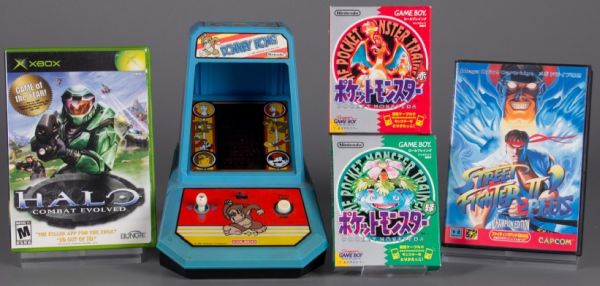
This year’s first new addition to the International Center for the History of Electronic Games’s Hall of Fame is Donkey Kong. Nintendo’s first big hit became an arcade sensation in 1980, and also introduced the world to a mustachioed plumber named Mario. On the game’s selection, ICHEG Director Jon-Paul Dyson said, “[Donkey Kong’s] overarching narrative of love and its vibrant graphics brought the game to life in a way that few other games could in the early 1980s. It captured the hearts of a generation.”

This year’s class also includes Halo: Combat Evolved, Bungie’s groundbreaking first person shooter and the game that put Microsoft’s Xbox on the map. Curator Shannon Symonds said, “[Halo] boasted one of the strongest multiplayer experiences of its time and created a legion of hardcore fans that refer to themselves as the ‘Halo Nation.’ ”

Hot off the heels of the launch of Pokemon Go, the Hall of Fame also chose to induct Pokemon Red and Blue, the first pair of games released in the far-reaching RPG franchise. The universal appeal of the franchise was a major factor in its selection, as Symonds added: “Pokemon Red and Blue launched a franchise that has taken the world by storm, vaulting many of its characters, such as Pikachu, into popular, mainstream culture. Nearly two decades after its inception and with the introduction of Pokemon Go, ‘Poke-mania’ shows little sign of fading.”

Finally, Capcom’s Street Fighter II: The World Warrior became the first one-on-one fighting game to be added to the Hall of Fame as the final member of the Class of 2017. ICHEG Assistant Director Jeremy Saucier believes that Street Fighter II’s social component fueled its popularity, adding, “This communal style of game play reinvigorated the arcade industry in the 1990s and helped give birth to a generation of fighting games.”

Congratulations to all of this year’s inductees.

The World Video Game Hall of Fame chose to deny entry to eight other finalists this year including Final Fantasy VII, Microsoft Windows Solitaire, Mortal Kombat, Myst, Portal, Resident Evil, Tomb Raider, and Wii Sports. But they’ll get another shot. Nominations are already being accepted for the Class of 2018.

2016 GOTY Scoreboard: Overwatch, Uncharted 4: A Thief’s End, and More

2016 was an absolutely wild year for video games.
After years in “Development Hell,” Doom (2016), Final Fantasy XV, and The Last Guardian were all finally finished and released. Even more surprising, Nintendo temporarily bowed out of the market as they put the Wii U on hiatus and prepared to move ahead with their mysterious NX console (which we now know as the Switch). And Blizzard jumped back into original console development in a big way with the launch of Overwatch.

As the recipient of three major awards (and more than a dozen awards from individual publications), Overwatch was head and shoulders above the rest of the field in the overall “Game of the Year” discussion last year, but a number of other games took home at least one prize in 2016.

You can see more of last year’s most-acclaimed titles, along with all of their “Game of the Year” accolades, after the break.

[Continue Reading…]

Is Uber’s CEO the Second-Best Wii Sports: Tennis Player in the World?

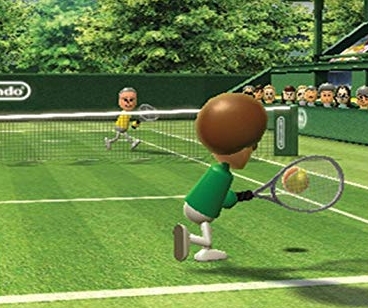
Whether they’re disrupting the marketplace or reinventing the workflow, Silicon Valley executives love to brag. And Uber CEO Travis Kalanick might be the biggest braggart of them all. Kalanick loves to say that his glorified taxi company is changing the way we think about transportation, but did you know that he also dominates the competition on the tennis court in Wii Sports? To hear him tell it, he even holds the second-best ranking on the game’s worldwide leaderboard.

[Continue Reading…]

A Brief History of Video Games – Final Fantasy VII

The latest VGC Essay looks back at Final Fantasy VII and Square’s desire to bring cinematic storytelling to the early days of Sony’s PlayStation. Here’s a teaser…

Since the beginning, every new console cycle has existed as its own separate era that video game players speak of with as much reverence as comic fans who use “Golden Age” and “Silver Age” as a shorthand to represent the different decades of comic production. Ralph Baer’s Odyssey (1st Generation) directly lead to Nolan Bushnell’s Atari 2600 (2nd Generation). Atari’s machine gave way to the rise of Nintendo’s NES (3rd Generation), which in turn lead to the “16-Bit Wars” of the Super NES and the Genesis (4th Generation).

Up to this point, Square had only released three Final Fantasy games in America: 1990’s Final Fantasy, 1991’s Final Fantasy II (released in Japan as Final Fantasy IV), and 1994’s Final Fantasy III (released in Japan as Final Fantasy VI). Even though the remaining three games had yet to make their way across the Pacific, the publisher was determined to unify the franchise’s numbering across all regions with the next sequel. But they still had to find the right home for their game.

Continue Reading the Full Essay →

Play Mac Classics in Your Browser Thanks to the Internet Archive

When it first began, the Internet Archive collected millions of webpages in an effort to create an historical map charting the growth of the World Wide Web.

More recently, they’ve become just as well known for their massive digitization projects that provide in-browser access to games and software previously released for consoles such as the Atari 2600, the Odyssey 2, and the Sega Genesis, as well as computer platforms like MS-DOS and Windows 3.1.

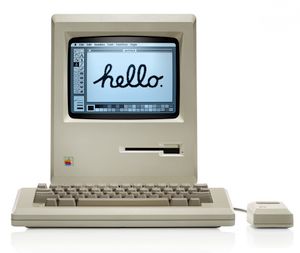
But today, the Internet Archive may have outdone itself with the launch of the Apple Macintosh Software Library.

Players can transport themselves back to the 80s with the Apple Macintosh Software Library, and many of us will be able to relive our school days with the system’s monochromatic GUI. The Apple Macintosh Software Library currently offers dozens of options for in-browser play including fan favorites such as Lode Runner, Brickles, and Dark Castle.

If you’re interested in learning more about this software collection, Jason Scott of the Internet Archive has published a nice overview at the Internet Archive Blog.

A Brief History of Video Games – The Sims

The latest VGC Essay contemplates the futility of determining the best-selling video game of all time and The Sims. Here’s a teaser…

What is the best-selling video game of all time? It’s a surprisingly hard question to answer as game publishers, unlike Hollywood film studios, refuse to release sales figures for their games on a title-by-title basis. But for years now, the conventional narrative has been that The Sims became the best-selling PC game of all time in 2002 after dethroning Myst, the graphical adventure game that sold more CD-ROM drives than every other piece of “multimedia” software combined.

Developed by Maxis, The Sims delivered a smaller, more personal, simulation that differed greatly from the macro scale of designer Will Wright’s previous games, SimCity and SimCity 2000. Instead of pulling the camera back, giving the “mayor” control of an entire city, The Sims moved the camera in close, allowing the player to interact with the day-to-day minutiae of a single family. Part Real World, part Demon Seed, and part Barbie Dream House, this approach allowed players to bypass the mayoral office and step right into the shoes of a god. However, it was a literal “Act of God” that encouraged developer Will Wright to create The Sims in the first place.

Continue Reading the Full Essay →

Uncharted 4: A Thief’s End Named “Best Game” at 2016-2017 BAFTA Games Awards

Nathan Drake is going to ride off into the sunset with one last “Game of the Year” award. The British Academy of Film and Television Arts hosted the ceremony for the 2016-2017 BAFTA Games Awards last night, and Uncharted 4: A Thief’s End was selected as the year’s “Best Game.”

Playdead’s Inside didn’t win the big prize, but the indie game scooped up four BAFTAs including “Artistic Achievement,” “Game Design,” “Narrative,” and “Original Property.” Ghost Town’s Overcooked (“Best British Game” and “Family”) and Campo Santo’s Firewatch (“Debut Game” and “Performer” for Cissy Jones) also managed to collect multiple awards as part of the festivities.

A whole slew of titles were able to pull out a win in one category last night, and they include That Dragon Cancer (“Game Innovation”), Rocket League (“Evolving Game”), Overwatch (“Multiplayer”), Pokemon Go (“Mobile & Handheld”), The Last Guardian (“Audio Achievement”), and Virginia (“Music”).

A complete list of winners and nominees from the 2016-2017 BAFTA Games Awards can be found after the break.

[Continue Reading…]