Shadow of the Colossus: From Humble Beginnings to Hollywood to Art

Sony recently teamed with developer Bluepoint Games to take Shadow of the Colossus and reimagine it “from the ground up” for the PS4. As one of the first games that could truly be described as “artistic,” it holds a special place in the hearts of many gamers. But how did it get there?

Sony recently teamed up with developer Bluepoint Games to take Shadow of the Colossus and reimagine it “from the ground up” for the PS4. As one of the first games that could truly be described as “artistic,” it holds a special place in the hearts of many gamers. But how did it get there?

Though it was critically-acclaimed from the very beginning, Ico was only a moderate hit for Sony and developer Fumito Ueda when it was released in 2001. But Ueda was thrilled with the game’s artistic ambition, and decided to create something even bigger as a followup.

[Continue Reading…]

Video Game Canon’s Version 2.0 Update is Now Available

This article refers to an older Version of the Video Game Canon. View the Top 1000 to see the most recent changes to the list.

The Video Game Canon has been upgraded to Version 2.0 thanks to the addition of four new lists that were published throughout the last year. Edge Magazine’s “100 Greatest Videogames” issue, Jeux Video’s “Top 100 Best Games of All Time,” Polygon’s massive “500 Best Games of All Time,” and Stuff UK’s “50 Greatest Games of All Time” have reshuffled the ranking in a big way.

Let’s take a look…

[Continue Reading…]

The Legend of Zelda: Breath of the Wild Wins “Game of the Year” at the 2017 Game Awards

The Legend of Zelda: Breath of the Wild, Cuphead, and Hellblade: Senua’s Sacrifice dominated this year’s Game Awards, which were hosted by Geoff Keighley last night in Los Angeles.

Breath of the Wild kickstarted the launch of the Nintendo Switch in a big way this past March, so it’s not surprising that it also won “Game of the Year” at the Game Awards. Link’s latest adventure also claimed victory in two additional categories last night, “Best Game Direction” and “Best Action/Adventure Game.”

Studio MDHR’s Cuphead was released to quite a bit of fanfare earlier this Fall, and the side-scrolling shooter delivered at the Game Awards with wins for “Best Art Direction” (thanks to its beautiful 1930s-inspired animation), “Best Independent Game,” and the fan-voted “Best Debut Indie Game.”

Finally, Ninja Theory has been touting Hellblade: Senua’s Sacrifice as their “AAA Indie,” and the game lived up to that billing with victories for “Best Audio Design,” “Games For Impact” (for a storyline that dealt with mental illness), and “Best Performance” for Melina Juergens’s voicework as Senua.

Congratulations to the development teams responsible for all this year’s nominees, and you can find the full list (along with all the winners) after the break.

[Continue Reading…]

A Brief History of Video Games – Call of Duty 4: Modern Warfare

The latest VGC Essay looks at the creation of Call of Duty 4: Modern Warfare and the massive growth of the Call of Duty franchise. Here’s a teaser…

General William Tecumseh Sherman famously declared that “War is Hell” in a speech in 1880, though I think it’s safe to assume that more people are familiar with the anti-war protestations of a certain green Muppet from 1980’s The Empire Strikes Back. While this sentiment has existed in the public consciousness for hundreds of years, the basic structure of a game as a confrontation that pits the player against the CPU (or another player) makes armed conflict an ideal setting.

War might be Hell, but it has also been very good for Activision’s bottom line thanks to the Call of Duty franchise.

Continue Reading the Full Essay →

A Brief History of Video Games – Mega Man 2

The latest VGC Essay looks at the the blockbuster success born out of the simple ambitions of Mega Man 2. Here’s a teaser…

The first Mega Man game is a bit of an odd duck, which has become even more pronounced as the years go by. The graphics are simplistic, the sound is tinny, there’s only six Robot Masters instead of the traditional eight, and there’s even a score counter (a feature that was jettisoned from the dozens of sequels that followed). There’s just a smoothness to subsequent games in the franchise that Capcom had yet to master with the first entry.

But like most Mega Man fans, I only learned all this after the fact. At the time, whatever memories I have of the first game were formed by guide writers who described it as an unfairly difficult game, old episodes of Captain N, and the fact that none of the local rental outlets owned a copy (unsurprisingly, Lee Trevino’s Fighting Golf was always available).

I finally got the chance to see what all the fuss was about with Mega Man 2, which was also the first game in the Mega Man franchise to be spearheaded by Capcom’s Keiji Inafune. With an expanded role in the sequel’s development, Inafune became known as the “Father” of Mega Man to plenty of fans, and codified many of the traditions and patterns the series is known for.

Continue Reading the Full Essay →

Who Came Up With National Video Games Day?

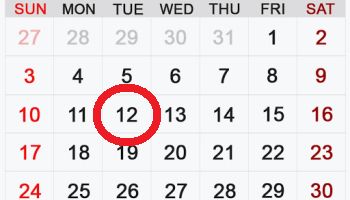
Yesterday was “National Video Games Day,” a holiday that’s designed to honors those special video game memories we all have. But I can’t figure out why the organizers of National Video Games Day chose September 12. It doesn’t celebrate the launch of Pong (that’s November 29)… It’s not Ralph Baer’s birthday (that’s March 8)… It’s not even the anniversary of “Mortal Monday” (believe it or not, that’s today, September 13).

[Continue Reading…]

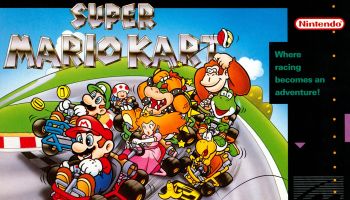
A Brief History of Video Games – Super Mario Kart

The latest VGC Essay looks at how Super Mario Kart strengthened and shattered friendships after it debuted in 1992. Here’s a teaser…

Even from its earliest days, the personalities behind the video game industry looked to pro wrestling’s combination of spectacle and soap opera for tips on how to behave. This dedication to competition came to a head in the early 90s when Nintendo and Sega engaged in the first “Console War.”

Beginning with the “Genesis Does What Nintendon’t” campaign in 1990, Sega began mercilessly picking at their rival over a variety of claims, some provable and some not. But that was just a warm-up for the infamous “Blast Processing” campaign and Nintendo’s eventual reply of asking their fans to “Play It Loud.” The Genesis and Super NES used these advertisements to compete in a head-to-head contest for the love and support of gamers everywhere, but the heaviest fighting actually took place on playgrounds and lunch tables between kids that weren’t even old enough to shave.

No game better symbolized this battleground of friend-versus-friend than Super Mario Kart.

Continue Reading the Full Essay →

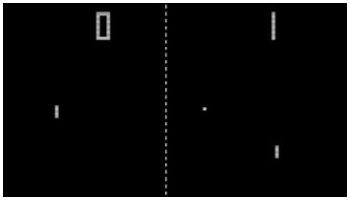
A Brief History of Video Games – Pong

The latest VGC Essay looks at the birth of Pong and asks why early game developers were so obsessed with recreating table tennis on our TVs. Here’s a teaser…

Why were early game developers so fixated on bouncing a ball back and forth?

It’s hard to pinpoint the very first video game, but it most likely belongs to A.S. Douglas and OXO. This electronic version of Tic-Tac-Toe was created by Douglas in 1952 to support his doctoral thesis, Interactions Between Human and Computer. But after that, the only question early gamemakers wanted to ask was, “Tennis, anyone?”

Continue Reading the Full Essay →

A Brief History of Video Games – Mike Tyson’s Punch-Out!!

The latest VGC Essay looks at how the real person at the center of Mike Tyson’s Punch-Out!! changed sports games and how Little Mac’s cartoonish opponents did as well. Here’s a teaser…

“They say I can’t lose. I say you can’t win!”
– Mike Tyson, to Little Mac, in 1987’s Mike Tyson’s Punch-Out!!

“There’s no one that can match me. My style is impetuous, my defense is impregnable, and I’m just ferocious. I want your heart! I want to eat his children!”
– Mike Tyson, about Lennox Lewis, in 2000

In the 13 years between those two quotes, Mike Tyson went from being the face of boxing (and Nintendo’s best-selling Mike Tyson’s Punch-Out!!) to becoming a punchline for late night comedians. In between, he was convicted of sexual assault in 1992 and bit off a part of Evander Holyfield’s ear in 1997.

From that moment on, Tyson would fit right in with the cartoon characters that made up the undercard to his eponymous game. After his retirement from the ring, Tyson would remake himself as something of a gentle giant, constantly tending to the pigeons he kept on the roof of his apartment building. His later decision to act in absurdist comedies like The Hangover and Mike Tyson Mysteries (an animated Scooby-Doo parody where Tyson is assisted by the ghost of the Marquess of Queensberry) just cemented it.

But the Mike Tyson of 1987 was cartoonish in a different way. The boxing prodigy known to the world as “Iron Mike” and “Kid Dynamite” demolished his opponents in ways that the sport hasn’t seen since. His first professional fight was over in less than two minutes. His next fight lasted a mere 52 seconds, while his fourth required only 39. And in 1986, Tyson knocked out Marvis Frazier in a little over 20 seconds, though an appeal changed the official time of the bout to 30 seconds.

“The Dream Fight” in Punch-Out!! was just as brutal. Tyson deals instant-knockdown uppercuts towards the game’s diminutive hero, Little Mac, for the first minute and a half of this epic boss battle. “Iron Mike” follows that up with a series of hooks that are so fast, it’s hard to keep up. In the second round, a series of ferocious jabs eventually give way to a wild combination of punches that are telegraphed by rapid-fire blinking. With bleary eyes and weary thumbs, hopefully you’ve figured out that the best strategy for fighting the champ is to just survive to the end of the third round and hope for a favorable decision.

Continue Reading the Full Essay →

Nintendo Will Release Super NES History Book Alongside Super NES Classic in September 2017

Nintendo is teaming up with Prima Games to release a colorful history of the Super NES this Fall.

Playing With Super Power: Nintendo SNES Classics is scheduled to be released alongside the Super NES Classic on September 29th, and it’ll be available in both hardcover (as a Special Slipcase Edition) and paperback.

This encyclopedic work will feature 320 pages of Super NES-fueled nostalgia, as well as a forward from Reggie Fils-Aimé, Nintendo of America’s President and COO. Here’s what fans can expect to find after they flip it open:

The Console: A nostalgic celebration and exploration of the Super Nintendo Entertainment System in all its 16-bit glory.

The Games: Discover everything you’ve always wanted to know about some of the most beloved SNES games, including speedrun tips and little-known facts.

The History: Learn about the SNES development and the visionaries behind this groundbreaking console.

The Legacy: An in-depth look at how the SNES has left its mark on the gaming industry, and how its legacy continues.

The Memories: From family stories to fan art to merchandise and more, this book is a love letter to fans of the Playing With Super Power era!

Speedrunning Tips: Some of the best speedrunners around share their tips and strategies for getting the best times in these beloved classic games.

Exclusive Foreword: Written by Reggie Fils-Aimé, President and COO of Nintendo of America.

Playing With Super Power: Nintendo SNES Classics is actually the second partnership between Nintendo and Prima Games. Last year, the two companies published Playing With Power: Nintendo NES Classics to coincide with the launch of the NES Classic.