IGN Updates Their “Top 100 Video Games of All Time” List for 2019

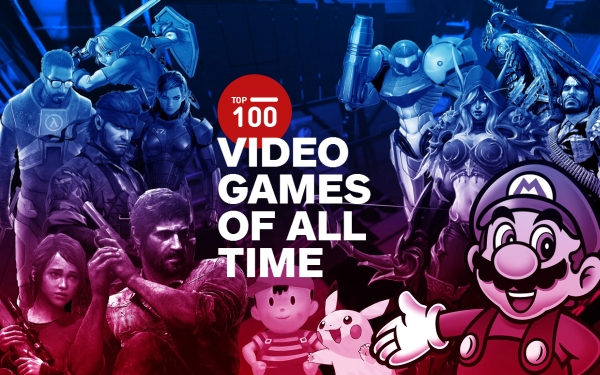
It’s been roughly 18 months since IGN last revised its “Top 100 Video Games of All Time” list, but the popular publication has just issued a new update that welcomes a huge number of new games into the club.

That said, it might feel a little familiar at the top, as Super Mario World is once again ranked at #1, which is a holdover from their 2018 list. Thankfully, a closer examination of the rest of the list was produced by IGN themselves in the companion article, “Why We Made the Changes We Made.”

There we discover that Capcom’s remake of Resident Evil 2 (#81) from earlier this year is the most recent game to be added to the list. It was joined by 14 other new additions, including Sony Santa Monica’s 2018 reboot of God of War (#29), Left 4 Dead 2 (#45), Rise of the Tomb Raider (#55), Tom Clancy’s Splinter Cell: Chaos Theory (#61), Red Dead Redemption 2 (#62), Mario Kart 8 Deluxe (#68), Fable II (#76), Fortnite (#77), Monster Hunter: World (#82), Tony Hawk’s Pro Skater 2 (#83), Assassin’s Creed IV: Black Flag (#95), Dishonored (#97), Divinity: Original Sin II (#98), and Borderlands 2 (#99).

This newfound variety was possible thanks to the removal of multiple games from the Mario and Zelda franchises, though several other games were also removed from last year’s Top 100 to make room. Among the games getting the boot were Team Fortress 2, Warcraft II: Tides of Darkness, Fallout 3, Metal Gear Solid 2: Sons of Liberty, Galaga, Grim Fandango, Banjo Kazooie, and The Oregon Trail.

IGN’s 2019 update to their “Top 100 Video Games of All Time” list will be added to the Video Game Canon in Version 4.0.
Bite-Sized Game History: Exploring the US’s Best-Selling Games from the 1990s to Now

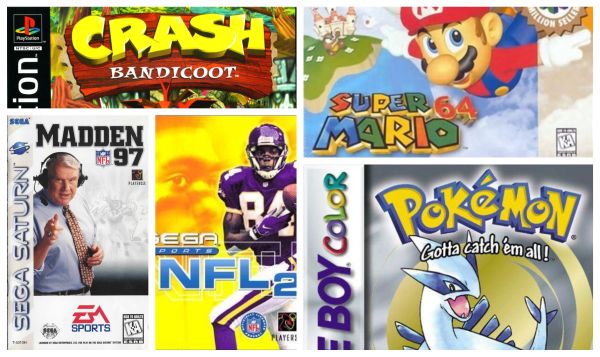
Using data from The NPD Group’s vast archive, Mat Piscatella recently shared some historical data on the best-selling video games from the 1990s to today.

Tracking the weekend box office results has become something of a spectator sport for moviegoers of all stripes since the lists were introduced in the early 1980s. Arguing about the financial merits of Star Wars, E.T.: The Extra-Terrestrial, Titanic, and Avatar became just as important as discussing each film’s critical reception.

You won’t find this sort of organized ranking of moneymakers in the video game industry, but the closest analogue would have to be the monthly Best-Seller Lists published by The NPD Group. However, the proprietary nature of this report means that the picture will always be incomplete.

Using data from the analyst firm’s vast archive, Mat Piscatella recently tried to pull back the curtain a little bit by sharing the list of best-selling games on several legacy consoles (the Saturn, the original PlayStation, the Nintendo 64, the Game Boy Color, and the Dreamcast) and a nearly defunct handheld (the Vita). He also examined the best-selling games through September 2018 on two modern consoles (the PS4 and Xbox One) and published a list of the top-selling titles for each year from 1995 to 2017.

It’s a very interesting collection of information, and the lists provide our best window yet into what games were considered popular in the United States in the 1990s and into today.

[Continue Reading…]

Speedruner Completes Nearly Perfect Run of Super Mario Bros. in 4 Minutes and 55.96 Seconds

The speedrunners competing to complete a perfect run in Super Mario Bros. got a little closer this week when KosmicD12 set a new world record of four minutes and 55.96 seconds on Monday.

Thanks to pixel-perfect platforming and a series of glitches (including running through the wall to find the Warp Zone in World 1-2), this “Any Percentage” run is nearly identical to the “Tool Assisted Run” of four minutes and 54.03 seconds.

In a “Tool Assisted Run,” a computer calculates the optimal path through the game using all known glitches, so to see an actual human person nearly match it is rather astounding.

KosmicD12 was rather tongue-tied after his record-setting feat, but he did manage to croak out, “I don’t know what to say.”

A nearly perfect run definitely speaks for itself, so I’m not sure anything else needs to be said. Though I guess congratulations are definitely in order.

IGN Publishes New Edition of “Top 100 Video Games of All Time” for 2018

IGN recently published a new update to their “Top 100 Video Games of All Time” list. The selections from the list will be added to the Video Game Canon in a future update.

IGN recently published a new update to their “Top 100 Video Games of All Time” list.

This time around, Super Mario World landed at #1, climbing 13 spots since the last time IGN selected a Top 100 in 2015. Three years ago, Super Mario Bros. 3 claimed the top spot, but it fell to #6 in the most recent ranking.

The site also enshrined several 2017 releases in their latest Top 100, honoring The Legend of Zelda: Breath of the Wild at #26, Persona 5 at #81, and Super Mario Odyssey at #84.

IGN’s “Top 100 Video Games of All Time” will be added to the Video Game Canon in a future update.

Listology 2.0: Exploring the Best Games From the 1990s

Video gaming went through some massive changes throughout the 1990s, greater than any ten-year period before or since.

The decade began with the familiar beeps and bloops of the NES, as Nintendo launched Super Mario Bros. 3 shortly after the New Year in 1990. The first shots of the “Console War” between the Genesis and the Super NES were be fired soon after, but the late night release of id Software’s Doom (and the rise of the PC as a gaming platform) in 1993 would change everything.

Doom didn’t just cement the First Person Shooter as gaming’s dominant genre, it blew open the door to more “mature” themes that Mortal Kombat hinted at a year earlier. Different philosophies on the public’s hunger for this type of content would lead Sega and Nintendo in opposing directions, and the market would be further splintered by the arrival of the Sony PlayStation. Emerging from the ashes of the planned “Nintendo PlayStation” add-on for the Super NES, Sony’s console introduced cinematic games like Resident Evil, Final Fantasy VII, Metal Gear Solid, and Tomb Raider.

Nintendo would strike back with the Nintendo 64, and a decade that began with pixelated plumbers flinging fire at a giant turtle would end with GoldenEye 007, Perfect Dark, Conker’s Bad Fur Day, and a vastly changed landscape for games.

That said, it was still Super Mario 64 on top. Find out where all 337 games released between January 1, 1990 and December 31, 1999 placed in Version 2.0 of the Video Game Canon after the break.

[Continue Reading…]

Dark Horse Will Publish “Super Mario Bros. Encyclopedia” in October 2018

Do you know everything there is to know about Mario, Luigi, Princess Peach, and the rest of the Mushroom Kingdom? Would you like to?
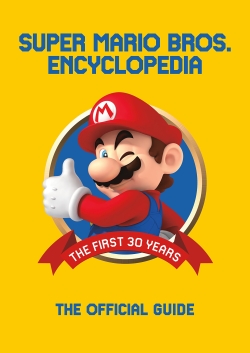
If you answered “Yes” to the latter question (or even if you said “Yes” to the former), then today is your lucky day. Dark Horse has announced that they’ll be publishing a Super Mario Bros. Encyclopedia this October.

Weighing in at 256 pages, this reference work will cover the first 30 years of “Super” Mario’s career, beginning with 1985’s Super Mario Bros.:

The Super Mario Encyclopedia is jam-packed with content from 17 Super Mario games and spans more than 30 years of the franchise’s history—from the original Super Mario Bros. to Super Mario 3D World. Track the evolution of the Goomba, witness the introduction of Yoshi, and relive your favorite levels.

This tome also contains an interview with producer Takashi Tezuka, tips to help you find every Coin, Star, Sun, and Mushroom… even explanations of glitches! With information on enemies, items, obstacles, and worlds from over 30 years of Mario, Super Mario Encyclopedia is the definitive resource for everything Super Mario!

Dark Horse’s Super Mario Bros. Encyclopedia will be released on October 23.

A Brief History of Video Games – Super Mario 64

The latest VGC Essay explores all the ways Nintendo tried to teach the world about 3D games with Super Mario 64. Here’s a teaser…

For Mario’s first foray into “The Third Dimension,” Nintendo wanted to ensure that everything was perfect. In fact, the Nintendo 64, its unique three-pronged controller, and the controller’s analog stick designed to better simulate 3D movement were all created with the needs of Super Mario 64 in mind.

Nintendo had good reason to be worried about getting all of the details just right, as most video gamers had never even seen a 3D platformer before Super Mario 64. Aside from a few experimental titles from the late 80s and early 90s, 3D movement was only found in a handful of titles on the market at the time, the most famous of which was probably EA’s Fade To Black. Naughty Dog’s Crash Bandicoot, which included pseudo-3D movement, beat Super Mario 64 to store shelves by about five weeks, but a majority of the game took place on a 2D plane.

So Nintendo used Super Mario 64 as an opportunity to introduce players to what was, in their mind, an entirely new genre. Shigeru Miyamoto’s exacting attention to detail helped mold every part of the game. The first interaction players had with the game was the appearance of an actual cameraman (Lakitu the Cloud), and instructions on how to control the camera’s angle with the diamond-shaped set of C-Buttons on the right side of the Nintendo 64 controller. Actually, let me back up… the very first thing most players experienced after booting up Super Mario 64 was the interactive Mario face on the Title Screen. Miyamoto saw fit to even offer players a primer on polygons as the squares, rectangles, and rhombi that made up Mario’s face could be grabbed and manipulated in dozens of different ways. In a way, “It’s-a me, Mario! Hello!” was a coded message that encouraged players to jump right into this new 3D world.

Continue Reading the Full Essay →

A Brief History of Video Games – Super Mario World 2: Yoshi’s Island

The latest VGC Essay looks at the unique advertising Nintendo employed for Super Mario World 2: Yoshi’s Island. Here’s a teaser…

I’m just guessing here, but I’d imagine that many Mario fans have no idea a sequel to Super Mario World even exists. Super Mario World 2: Yoshi’s Island was released for the Super NES in 1995 and starred the titular dinosaur in his first solo adventure. Most fans refer to the game as just “Yoshi’s Island,” because it’s such a departure from the rest of the franchise to that point, and because the “Super Mario World 2” print on the game’s box is almost invisible.

Serving as a prequel to the entire Super Mario franchise, Yoshi’s Island introduced Baby Mario to the world and tasked Yoshi with protecting the infant from Baby Bowser. While it’s Fall 1995 release was overshadowed by the launch of the Sega Saturn and the Sony PlayStation, a dedicated cult following has built up around the game over the years.

Though they might not have known exactly which game it was promoting, I guarantee that everyone remembers the commercial Nintendo used to sell Super Mario World 2: Yoshi’s Island in America.

Continue Reading the Full Essay →

A Brief History of Video Games – Super Mario Bros. 3

The latest VGC Essay looks at Mario’s actorly ambitions in Super Mario Bros. 3. Here’s a teaser…

“All the world’s a stage, and all the men and women merely players.”
– As You Like It, Act II Scene VII

Mario and his Mushroom Kingdom cohorts have held a surprising number of occupations over the years. In addition to his plumbing business and the hero-for-hire game, Mario has been employed as a multi-sport athlete, a race car driver, a referee, a dancer, an artist, a virologist, and a typing tutor. He’s practically done it all, and I think only political office has eluded him. I guess that’s the trouble with monarchies.

Bouncing from genre to genre like that is usually considered a liability for other game characters. As sublimely silly as the idea seems, no one wants to see Kratos squeezed into a go-kart. And yet, fans readily accept Mario’s multitasking, and many of his spinoff adventures are now more popular than some of the franchise’s traditional platformers. There’s a strong possibility this all stems from the fact that Mario’s creator, Shigeru Miyamoto, designed the character this way from the beginning.

Continue Reading the Full Essay →