
National Videogame Museum Launches Preservation-Focused Videogame Heritage Society in UK

The National Videogame Museum, located in Sheffield in the United Kingdom, has launched the Videogame Heritage Society, a new video game preservation initiative that will bring together a network of libraries, museums, and collectors.

The Videogame Heritage Society is a collaborative project that aims to share knowledge with all members about the best way to preserve and exhibit video games:

The National Videogame Museum is launching a new initiative today at BFI Southbank, leading a network of museums and independent collectors who are engaged in videogame preservation. The Videogame Heritage Society (VHS) includes the Science and Media Museum, Bath Spa University, British Library and Museum of London as well as many independent collectors. It will develop best practice and share knowledge across the museum sector and beyond about preserving and exhibiting videogames.

“This group is for anyone who cares about or works in videogame preservation,” said British Games Institute Chairman Ian Livingstone. “We recognise that in the UK and around the world, the expertise in this field isn’t just locked inside museums and heritage institutions, but also inside a wide range of dedicated and passionate private collectors. The VHS will bring everyone together to preserve the important heritage of videogames in our country.”

More information about the Videogame Heritage Society can be found at The BGI‘s official website.


The Strong Museum of Play Helped Wired Pick “Every Year’s Most Iconic Video Game Since 1979”

It’s been slightly more than 40 years since Space Invaders transformed video games from a niche hobby into a global phenomenon. Picking up a year later from that point, Wired recently teamed up with curators from the Strong Museum of Play (which is also home to the World Video Game Hall of Fame) to determine “Every Year’s Most Iconic Video Game Since 1979.”

Jon-Paul Dyson and Shannon Symonds from the Strong Museum of Play dive into the last 40 years of video game history and come up with a list of some of the greatest games of all time. With memorable titles like Halo, Super Mario Bros., The Last of Us, Doom, The Sims and more, see which games were chosen as the most memorable and iconic of the year they were released.

[Continue Reading…]

More Than 2,500 Playable MS-DOS Games Added to the Internet Archive

The Internet Archive has made it their mission to safeguard as much of the Internet as they can, but the group is also heavily involved in preserving classic video games and making them playable for a new generation of players through in-browser emulation.

Earlier this week, they massively expanded the number of retro video games available in their collection thanks to the addition of more than 2,500 MS-DOS games from the 1980s and 1990s.

It wasn’t easy getting all of those titles to work in a browser, and Curator Jason Scott had a bit to say about the process on the Internet Archive Blog:

The update of these MS-DOS games comes from a project called eXoDOS, which has expanded over the years in the realm of collecting DOS games for easy playability on modern systems to tracking down and capturing, as best as can be done, the full context of DOS games – from the earliest simple games in the first couple years of the IBM PC to recently created independent productions that still work in the MS-DOS environment.

What makes the collection more than just a pile of old, now-playable games, is how it has to take head-on the problems of software preservation and history. Having an old executable and a scanned copy of the manual represents only the first few steps. DOS has remained consistent in some ways over the last (nearly) 40 years, but a lot has changed under the hood and programs were sometimes only written to work on very specific hardware and a very specific setup. They were released, sold some amount of copies, and then disappeared off the shelves, if not everyone’s memories.

It is all these extra steps, under the hood, of acquisition and configuration, that represents the hardest work by the eXoDOS project, and I recognize that long-time and Herculean effort. As a result, the eXoDOS project has over 7,000 titles they’ve made work dependably and consistently.

Even with 2,500 new additions, you’re not going to find every MS-DOS game ever released in the Internet Archive’s collection. But you will find a wide variety of games from the Video Game Canon, including id Software’s The Ultimate Doom (#23), LucasArts’s The Secret of Monkey Island (#86), Psygnosis’s Wipeout (#192), EA’s original The Need For Speed (#587), and many more.

“Game Masters: The Exhibition” Opens at National Film and Sound Archive of Australia

Earlier today, the National Film and Sound Archive of Australia in Canberra officially opened the doors to Game Masters: The Exhibition, a new exhibit that chronicles “an interactive journey through five decades of video game history.” Museumgoers who visit the Game Masters exhibit will be able to view “interviews, never-before-seen concept artwork, [and] an amazing display of vintage consoles and collectable items,” as well as an arcade installation with dozens of games.

Game Masters is an interactive journey through five decades of video game history, offering both a behind-the-scenes look at the creative process behind the world’s most popular characters and franchises, and a chance to play them. Featuring interviews, never-before-seen concept artwork, an amazing display of vintage consoles and collectable items, and 80 playable games, visitors won’t want to leave!

[…]

Game Masters is divided into three sections: Arcade Heroes, Game Changers and Indies. It features unique experiences such as a spectacular multiplayer dance stage for Dance Central 3 (2012), hands-on experiential music booths and a selection of original classic arcade machines from the 1970s and ‘80s acquired especially for the exhibition, all playable in their original form.

The National Film and Sound Archive of Australia will also use this opportunity to begin archiving important games developed within Australia. The first eight games selected by the program include a nice variety of titles released over the last 37 years:

Initial List of Games Selected for Preservation by the National Film and Sound Archive of Australia

  • The Hobbit (Beam Software, 1982)
  • Halloween Harry (Interactive Binary Illusions / Sub Zero Software, 1985/1993)
  • Shadowrun (Beam Software, 1993)
  • L.A. Noire (Team Bondi, 2011)
  • Submerged (Uppercut Games, 2015)
  • Hollow Knight (Team Cherry, 2017)
  • Florence (Mountains, 2018)
  • Espire 1: VR Operative (Digital Lode, 2019)

More games will be added to the archive on an ongoing basis, and Game Masters: The Exhibition will remain open to the public through March 9, 2020.

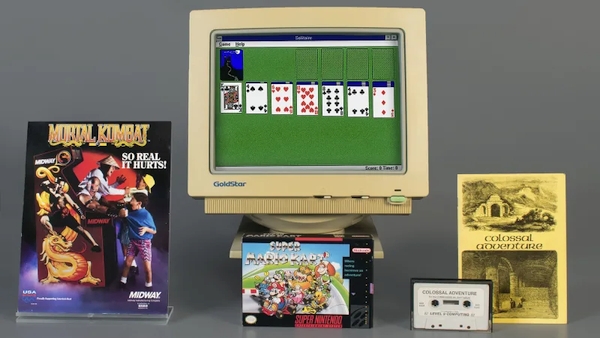
World Video Game Hall of Fame’s Class of 2019 Includes Super Mario Kart, Mortal Kombat, Windows Solitaire, and Colossal Cave Adventure

The World Video Game Hall of Fame has welcomed four new games into the fold, as the inductees from the Class of 2019 were announced this morning in a special ceremony. This year, three games that practically defined gaming in the 1990s lead the way, while a groundbreaking text adventure from the 1970s also made the cut.

[Continue Reading…]

Introducing the Finalists for the World Video Game Hall of Fame’s Class of 2019

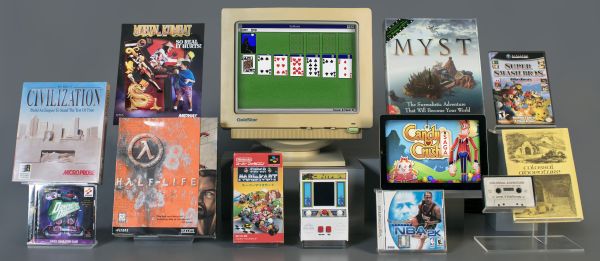
The World Video Game Hall of Fame, which is overseen by The Strong Museum of Play, has announced the finalists for this year’s crop of inductees. We’ll have to wait until May to find out which games make the final cut, but we now know that a dozen classic titles will be in the running for the Class of 2019.

This year’s finalists include several games that are taking one more shot at immortality, including Midway’s Mortal Kombat, Cyan Worlds’s Myst, Microsoft’s Windows Solitaire, and Valve’s Half-Life. All four have a strong claim to “Hall of Fame” status, as Myst helped popularize CD-ROMs, Half-Life pushed narrative games to new heights, Mortal Kombat’s controversial violence is still discussed today, and Windows Solitaire may just be the most-played game ever.

But they’ll have to compete against a slate of other titles that includes King’s Candy Crush, Atari’s Centipede, William Crowther’s Colossal Cave Adventure, Konami’s Dance Dance Revolution, Sega’s NBA 2K, Sid Meier’s Civilization, and Nintendo’s Super Mario Kart and Super Smash Bros. Melee.

Gaming fans from around the globe will be able to influence which games will be eligible for induction this year through the Player’s Choice Ballot, which will be open from March 21st through the 28th. The remaining ballots will come from the Hall of Fame’s International Selection Advisory Committee, which is comprised of journalists and scholars who are “familiar with the history of video games.”

The World Video Game Hall of Fame’s Class of 2019 will announced on May 2, but you can learn more about this year’s finalists after the break.

[Continue Reading…]

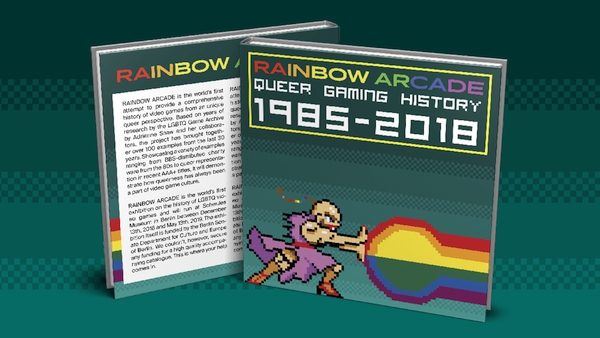
The Queer History of Video Games is Now on Display at Schwules Museum’s “Rainbow Arcade”

The Schwules Museum in Berlin has opened the Rainbow Arcade, an exhibit which will explore the “queer history of video games”:

For the first time in the world, the queer history of video games will be explored in a major exhibition: RAINBOW ARCADE at Schwules Museum features a wide variety of exhibits spanning over 30 years of media history, including 12 playable titles, concept drawings, modifications written by fans themselves and documentations of online communities. RAINBOW ARCADE will be taking stock of contemporary pop cultural questions of representation, stereotypical and discriminatory narratives in entertainment media, and our cultural memory. For the first time, research by the LGBTQ Game Archive will be presented in a museum.

Visitors to the museum will be able to play several examples of gaming’s queer history, including GameGrumps’s Dream Daddy, Midboss’s 2064: Read Only Memories, Anna Anthropy’s Lesbian Spider-Queens of Mars, and more.

The Rainbow Arcade exhibit is curated by Sarah Rudolph (herzteile.org), Jan Schnorrenberg (Schwules Museum), and Dr. Adrienne Shaw (Temple University, LGBTQ Video Game Archive), and it’ll be open to the public through May 13, 2019.

Library of Congress Has Ruled Libraries and Museums Can Break DRM to Preserve Older Games

The US Copyright Office and the Library of Congress have ruled that museums and libraries may now disable digital rights management (DRM) software when attempting to preserve video games available for defunct platforms.

The US Copyright Office and the Library of Congress have ruled that museums and libraries may now disable digital rights management (DRM) software when attempting to preserve video games available for defunct platforms.

The rule is officially known as the “Exemption to Prohibition on Circumvention of Copyright Protection Systems for Access Control Technologies,” and a very quick summary is available at Polygon:

This week the Library of Congress and the U.S. Copyright Office revised its list of specific exceptions to the Digital Millennium Copyright Act, also known as the DMCA. Their guidance reaffirms the rights of software preservationists to circumvent digital rights management (DRM) software, in some cases expanding their ability to revive older games. It also opens the door, legally speaking, to do-it-yourselfers and electronics repair outlets to break DRM in pursuit of fixing hardware.

A more thorough analysis of the ruling, specifically detailing how it’ll effect preservationists looking to bring back early versions of MMOs like EverQuest and World of Warcraft, is available at Motherboard:

Today’s news should be good for archivists and museums, who’ve long struggled with the best way to preserve video games such as Everquest or World of Warcraft. Multiplayer games like these require both software that players run on their computers locally, and software running on a company’s server—software that is much harder for historians to get their hands on and run. And when they do manage to get an independent server running, big game companies like Blizzard have taken legal action against people running unauthorized servers.

This is a great day for anyone interested in the history of games, and for all the historians and librarians working to preserve the classics for the next generation.

Welcome Class of 2018: Four New Games Inducted into the World Video Game Hall of Fame

Yesterday, the Strong Museum and the International Center for the History of Electronic Games announced this year’s inductees to the World Video Game Hall of Fame.

Yesterday, the Strong Museum and the International Center for the History of Electronic Games announced this year’s inductees to the World Video Game Hall of Fame. The Class of 2018 includes Final Fantasy VII, Square Enix’s beloved RPG; ​Tomb Raider, Eidos Interactive’s 1996 introduction to Lara Croft; John Madden Football, EA Sports’s first football simulation; and Spacewar!, an early game created by the Tech Model Railroad Club at MIT in 1962.

[Continue Reading…]

12 Finalists Announced for the World Video Game Hall of Fame’s Class of 2018

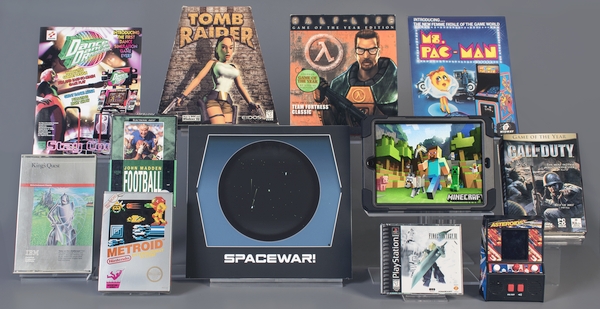
Curators at the International Center for the History of Electronic Games and the Strong Museum have announced the finalists for the World Video Game Hall of Fame’s Class of 2018.

Curators at the International Center for the History of Electronic Games and the Strong Museum have announced the finalists for the World Video Game Hall of Fame’s Class of 2018. Eight games will get their first chance to be inducted into gaming’s inner circle this year, including Asteroids, Call of Duty, Dance Dance Revolution, Half-Life, King’s Quest, Metroid, Ms. Pac-Man, and Spacewar!

Two other games, Final Fantasy VII and Tomb Raider, were previously in the finalist pool for the Class of 2017. They’ll get another chance this year alongside John Madden Football and Minecraft, which were previously on the ballot in 2016.

The World Video Game Hall of Fame will announce the inductees for the Class of 2018 on Thursday, May 3, at 10:30 AM. But this year, fans will get a vote in the first-ever Player’s Choice ballot. According to the rules, “the three games that receive the most public votes will form one “Player’s Choice” ballot, which will join the 27 other ballots submitted by members of the International Selection Advisory Committee, a supporting group composed of journalists, scholars, and other individuals familiar with the history of video games and their role in society.” Fans can make their voice heard through the Player’s Choice ballot once a day until April 4th. So vote early and vote often!

If for some reason you’re unfamiliar with this year’s finalists, the World Video Game Hall of Fame put together a helpful cheat sheet…

[Continue Reading…]