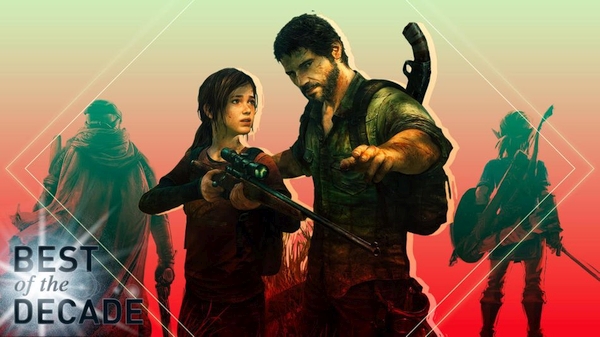


I don’t know if you’ve noticed or not, but Naughty Dog’s The Last of Us has had a pretty good year. An enhanced remake known as The Last of Us Part I helped set new standards for accessibility in games when it debuted on the PS5 in September. HBO’s hugely popular live action adaptation followed in January to rave reviews and some of the highest ratings in the network’s history. And now, it has been inducted into the Strong Museum’s World Video Game Hall of Fame as part of the Class of 2023.
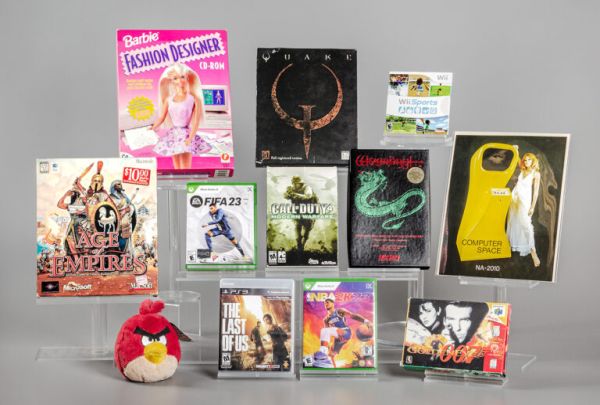
Three other games were inducted this year, and each one sparked a revolution in video games in their own way.
Nintendo’s Wii Sports launched alongside the Wii in 2006 and popularized motion controls in a big way. Not only did Nintendo’s traditional audience love it, but the game also became a favorite of seniors and inspired Sony and Microsoft to introduce motion peripherals later that generation.
Like Wii Sports, Mattel Media’s Barbie Fashion Designer also opened up video games to a new audience in 1996. The dress-up game sold more than half a million copies in its first year (more than megasellers like Doom or Quake over a similar span of time), kickstarted a conversation about gender and gaming, and served as an introduction to technology for many women.
Finally, Nolan Bushnell and Ted Dabny’s Computer Space, the first commercially-available video game, has made its way into the World Video Game Hall of Fame
The historians and curators from the World Video Game Hall of Fame spared a few thoughts about the Class of 2023, which you can find after the break.

 The organizers of South By Southwest have closed the doors on yet another festival within the Austin city limits, but for the first time in nearly a decade, they did so without the SXSW Gaming Awards. According to a spokesperson for the event, the Gaming Awards were discontinued this year in an effort to “streamline our festival a bit more.”






 Roughly a month ago, a discussion about the distinctly American flavor that dominates most of the discourse around classic games broke out on Twitter. Some of the UK’s best-known game writers weighed in throughout the thread, and they all agreed that games that were popular in the US, but virtually unknown in UK, somehow managed to push out many would-be blockbusters that never made it across the Atlantic.