

“Game of the Year” at the 2021 Game Awards Goes to Hazelight’s It Take Two

The new release calendar was a bit thinner in 2021 for a variety of reasons, so this year’s slate at The Game Awards was truly a free-for-all. With no clear frontrunner, many people expected a big night for Arkane’s Deathloop, which received nine nominations across eight categories (including “Game of the Year”). But with more than 100 games receiving at least one nomination, there were bound to be some surprises.

And there were definitely some surprises… such as It Takes Two winning “Game of the Year.” Hazelight’s weird and wild multiplayer adventure also won “Best Multiplayer” and beat out four Nintendo-produced titles to triumph in the “Best Family Game” category.

In between a dizzying amount of trailers for upcoming games, musical performances, and a short scene from The Matrix Resurrections, host Geoff Keighley gave out a few other awards.

While it was denied the big prize, Deathloop collected two statuettes (for “Best Game Direction” and “Best Art Direction”). Other “Game of the Year” nominees had their moment in the sun, including Nintendo’s Metroid Dread, which won “Best Action/Adventure Game.” And Maggie Robertson’s appearance as Lady Dimitrescu in Resident Evil Village won over the Internet earlier this year, which made her “Best Performance” win at The Game Awards rather fitting.

Other multi-award winners included Microsoft’s Forza Horizon 5 (“Best Audio Design,” “Best Sports/Racing Game,” and “Innovation in Accessibility”), Square Enix’s Final Fantasy XIV (“Best Ongoing Game” and “Best Community Support”), Ember Lab’s Kena: Bridge of Spirits (“Best Independent Game” and “Best Debut Indie”).

This year’s group of nominees also included Cyberpunk 2077, which was released in December 2020 and missed the cutoff for last year’s judging period. While it received a chilly reception at launch, after a year of updates and bug fixes, CD Projekt’s sprawling futuristic RPG received two nominations, but didn’t win in either category. This year’s cutoff (November 19th) was particularly early, so we’ll likely be talking about Halo Infinite at the 2022 Game Awards.

But that’s next year. Right now, you can find a video replay of the 2021 Game Awards after the break, as well as a complete list of winners, and all the nominees.

[Continue Reading…]

Games Radar Extends Their “Ultimate Game of All Time” Shortlist to “The 50 Best Games of All Time”

To celebrate the 50th anniversary of the launch of Computer Space (and the dawn of the commercial game industry), this year’s edition of the Golden Joystick Awards included a special category for the “Ultimate Game of All Time.” Forced to choose from a shortlist of 20 groundbreaking games, the public overwhelmingly voted for From Software’s Dark Souls.

But the editors at Games Radar, the popular online publication that administers the Golden Joystick Awards, weren’t content to stop there. They extended the shortlist to a full 50 games and published “The 50 Best Games of All Time” last week.

You’ll find most of the classic classics (including Tetris, Pac-Man, and Street Fighter II) in the shortlist for the “Ultimate Game of All Time” competition, so there was a lot of room for new classics such as God of War (#26), Hades (#43), and Animal Crossing: New Horizons (#50) in the supplemental list. The listmakers also picked up the slack where the shortlist fell a little… well… short, and made sure to include perennially-popular games like The Elder Scrolls V: Skyrim (#21), BioShock (#22), Resident Evil 4 (#24) in the early part of the 21-50 range.

Games Radar’s “The 50 Best Games of All Time” will be included in the next update to the Video Game Canon sometime in 2022.

Microsoft Opens Virtual Xbox Museum for Console’s 20th Anniversary

The original Xbox made its worldwide debut on November 15, 2001, and Microsoft has been celebrating 20 Years of Xbox with special Anniversary Edition swag and the #Xbox20 hashtag all year long. The consolemaker will also roll out a six-part documentary series, Power On: The Story of Xbox, in December.

But first, they’ve opened the virtual doors to an Xbox Museum at Xbox.com.

[Continue Reading…]

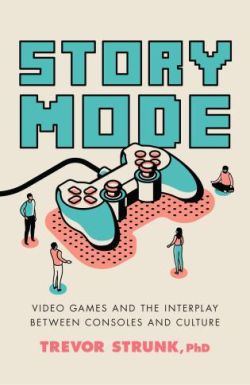
Trevor Strunk’s “Story Mode: Video Games and the Interplay Between Consoles and Culture” is Now Available

Trevor Strunk is the host of the No Cartridge podcast, though you might also know him as @Hegelbon on Twitter. As of today, he is also the author of Story Mode: Video Games and the Interplay Between Consoles and Culture, which was recently published by Prometheus Books.

Story Mode looks to examine how several popular game franchises (such as Call of Duty) have changed over the years, as well as how those games have begun to rewrite our culture in their own way:

In Story Mode, video games critic and host of the No Cartridge podcast Trevor Strunk traces how some of the most popular and influential game series have changed over years and even decades of their continued existence and growth. We see how the Call of Duty games—once historical simulators that valorized conflicts like World War II—went “modern,” complete with endless conflicts, false flag murders of civilians, and hyperadvanced technology. It can be said that Fortnite’s runaway popularity hinges on a competition for finite resources in an era of horrific inequality. Strunk reveals how these shifts occurred as direct reflections of the culture in which games were produced, thus offering us a uniquely clear window into society’s evolving morals on a mass scale.

Story Mode asks the question, Why do video games have a uniquely powerful ability to impact culture? Strunk argues that the participatory nature of games themselves not only provides players with a sense of ownership of the narratives within, but also allows for the consumption of games to be a revelatory experience as the meaning of a game is oftentimes derived by the manner in which they are played.

An excerpt from Story Mode detailing the rise of id Software’s Doom and how it eventually gave way to “acceptable” violence in games (“How To Get Away With Making An Ultraviolent Video Game”) can be found at Defector.

Shortlist (and Winner) Announced for “Ultimate Game of All Time” Vote at 2021 Golden Joystick Awards

By the estimation of the Golden Joystick Awards, more than 1.1 million video games have been released since Atari’s Computer Space ushered in the medium’s commercial era in 1971. But is it possible to sweep away all the chaff and crown one single title as the “Ultimate Game of All Time”?

I still don’t know the answer to that question. But that’s not going to stop the people behind the Golden Joystick Awards from trying. And they want your help.

[Continue Reading…]

“Nightmare Mode” Anthology is Now Available from Boss Fight Books

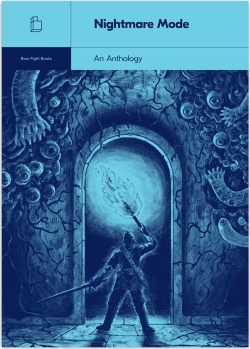
Promising “a fresh angle on a familiar topic,” Boss Fight Books is back with Nightmare Mode, a new ebook-exclusive anthology.
Now available to download through their official website, the collection features essays and interviews from previous Boss Fight authors David L. Craddock, Alexa Ray Corriea, Alyse Knorr, Alex Kane, Salvatore Pane, Philip J Reed, Gabe Durham, Jon Irwin, Chris Kohler, and Michael P. Williams:

  • David L. Craddock on how Shovel Knight‘s developers collaborated with speedrunners
  • Alexa Ray Corriea on the characters and themes in Kingdom Hearts III
  • Alyse Knorr on how Princess Peach’s story draws on 2000 years of women in peril
  • Alex Kane interviews the man behind Star Wars Battlefront II‘s use of motion capture technology
  • Salvatore Pane on the fan projects that have kept the Mega Man series alive
  • Philip J Reed interviews S.D. Perry about her beloved Resident Evil novels
  • Gabe Durham on how Zelda‘s fandom influenced the official Zelda timeline
  • Jon Irwin savors the anticipation of waiting for a new Mario game
  • Chris Kohler interviews Final Fantasy composer Nobuo Uematsu about his legendary soundtracks
  • Michael P. Williams on how Chrono Trigger fits into the Japanese tradition of retrofuturism

Nightmare Mode is Boss Fight’s second digital anthology, carrying on the tradition started by Continue? The Boss Fight Books Anthology, which was originally published in 2015.

Bite-Sized Game History: Looking Back at the GameCube, IGN Through the Years, and Doom Takes Over Twitter

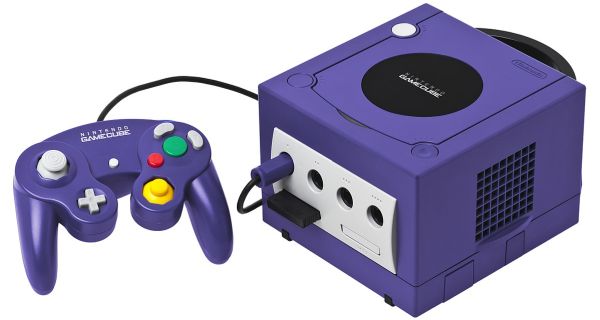
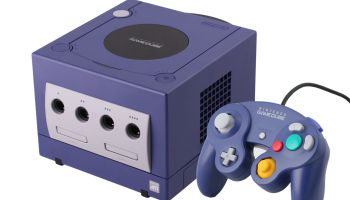
With more than 50 years of history to pick from, a milestone birthday for some game or console happens nearly every day. But 2021 is a particularly big year for the fine folks at Nintendo. The consolemaker extinguished 25 candles for the Nintendo 64 over the Summer and blew out 20 for the GameCube just last month.

We’ll talk a bit about both of those anniversaries in this edition of Bite-Size Game History, as well as a new way to play Doom (which will officially turn 28 in a few short weeks).

[Continue Reading…]

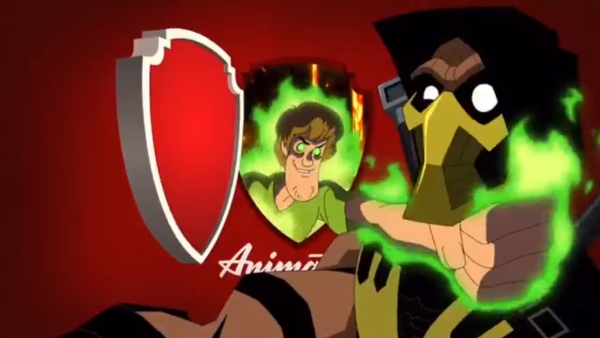
Bite-Sized Game History: Tennis For Two Recreated, Power Rangers: Project Nomad Exposed, and Shaggy’s Mortal Kombat Debut

It’s an oft-repeated mantra in certain circles (and I’m sure it’s come up in this column before), but game development is hard. Projects morph and mutate as they wind their way through development, and many never make it out the other side. So for this edition of Bite-Sized Game History, let’s look at a few things that disappeared over the years, but still live on in their own way…

[Continue Reading…]

2021 Update to the Video Game Canon Shakes Up the Top 1000 in a Big Way (But Tetris is Still #1)

This article refers to an older Version of the Video Game Canon. View the Top 1000 to see the most recent changes to the list.

Version 5.0 of the Video Game Canon is now available. Aggregating the critical consensus from 66 Best Video Games of All Time lists published between 1995 and 2020, this updated and expanded edition of the Video Game Canon has grown to include a total of 1,396 games.

Seven lists were added to the dataset in 2021, including recent lists published by GamingBible and Hardcore Gaming 101. Several legacy lists that weren’t part of previous calculations were also collected for the first time, including lists from Flux Magazine (1995), Hyper (1999), GamePro (2007), The Irish Times (2013), and Power Unlimited (2015).

As in years past, each game was ranked against the rest of the field using the C-Score, a formula that adds together each game’s Average Ranking and the complementary percentage of its Appearance Frequency across all lists. To give recent titles a chance to build their reputation, a game must also be at least three years old (and released on or before December 31, 2017) to be eligible for inclusion. So a game with a lower C-Score will rank higher on the Video Game Canon.

With these rules established, there was one game that was far ahead of the pack… Tetris (just as it’s been for the last four iterations of the Video Game Canon). Alexey Pajitnov’s puzzler reached the zenith of Version 5.0 of the Video Game Canon thanks to its extremely low Average Ranking (18.09) and extremely high Appearance Frequency (93.94%). Those components give it a C-Score of 24.15, which is well below the average C-Score of 195 and almost 12 points better than the runner-up.

[Continue Reading…]

Browse Video Game Canon’s Big List of Books About Games

Are you looking to delve deeper into game history and the study of game culture? Then look no further than the Big List of Books About Games.

Obviously, the Big List of Books About Games is not a list of every book ever published about video games. But it’s certainly a good place to start… and there is a lot of options about exactly where you could begin.

History buffs would do well to begin with Steven Kent’s The Ultimate History of Video Games, a book that provides a pretty good overview of everything from Pong through the beginnings of the PS2/GameCube/Xbox era. David Sheff’s Game Over: How Nintendo Zapped an American Industry, Captured Your Dollars, and Enslaved Your Children fills in a lot of the gaps with a very detailed account of Nintendo’s rise from the early 1980s up through the dawn of the Nintendo 64. And Tristan Donovan’s Replay: The History of Video Games travels across the pond to cover the same timeframe with an additional focus on the game development industry in Europe.

If you want to go way back, David Sudnow’s Pilgrim in the Microworld is a wild game-specific study about how one non-player got sucked into an obsession with video games. Out of print for decades, the book was republished by Boss Fight Books in 2020.

Closer to now, Jason Schreier’s Blood, Sweat, and Pixels: The Triumphant, Turbulent Stories Behind How Video Games Are Made and the anthology The State of Play: Creators and Critics on Video Game Culture will give you a painfully accurate picture of what game development and game culture are like today.

I would also strongly recommend David Kushner’s Masters of Doom: How Two Guys Created an Empire and Transformed Pop Culture, especially if you ever wanted to know more about the creation of Doom or the diverging career paths of John Romero and John Carmack.

With hundreds of choices like this, the Big List of Books About Games is currently split into four categories (and like these titles, some will be highlighted as “Recommended” picks):

Commentary, Criticism, and Cultural Studies
History (Before 2000)
History (2000 – Present)
Memoirs

The Big List of Books About Games will be updated on a regular basis, but if there’s a title you know I’m missing, please let me know through the Contact page.