

Jordan Mechner’s “Replay: Memoir of an Uprooted Family” is Now Available

Jordan Mechner previously chronicled the early portions of his career in The Making of Karateka: Journals 1982-1985 and The Making of Prince of Persia: Journals 1985-1993, but more recently he’s turned his illustrator’s eye to his own family history.
Replay: Memoir of an Uprooted Family is now available in bookstores in hardcover and as a downloadable ebook via First Second Books, and it tells the story of “his family’s journey through war, Nazi occupation, and everyday marital strife.”

Writing on his official website, Mechner describes Replay as “a very special [and] personal work for me” and explains that the graphic novel memoir “interweaves the story of my life as a game developer (making Prince of Persia, Karateka and The Last Express) with my dad’s flight from Vienna as a child refugee in 1938-41 through Nazi-occupied France, and my grandfather’s back story as an Austrian teenage soldier in World War I”:

In this intergenerational graphic memoir, renowned video game designer Jordan Mechner traces his family’s journey through war, Nazi occupation, and everyday marital strife.

1914. A teenage romantic heads to the enlistment office when his idyllic life in a Jewish enclave of the Austro-Hungarian Empire is shattered by World War I.

1938. A seven-year-old refugee begins a desperate odyssey through France, struggling to outrun the rapidly expanding Nazi regime and reunite with his family on the other side of the Atlantic.

2015. The creator of a world-famous video game franchise weighs the costs of uprooting his family and moving to France as the cracks in his marriage begin to grow.

Prince of Persia creator Jordan Mechner calls on the voices of his father and grandfather to weave a powerful story about the enduring challenge of holding a family together in the face of an ever-changing world.

The Internet Archive will be hosting a virtual Book Talk event for Replay with Mechner on March 27 at 1:00 PM (Eastern Time). It’ll be hosted by Chris Kohler of Digital Eclipse (coincidentally, the developer behind The Making of Karateka compilation for the PC, PS4, PS5, Switch, Xbox One, and Xbox Series X|S), and tickets are currently available for free.

Here’s the Finalists for the World Video Game Hall of Fame’s Class of 2024

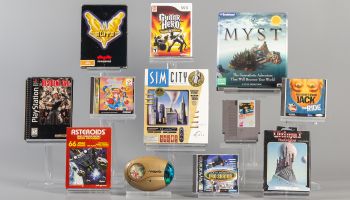
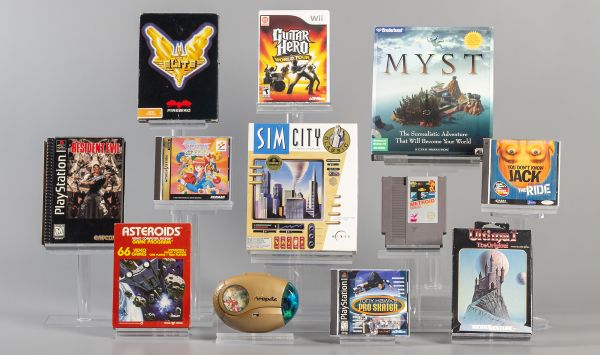
Spring is in the air, and that means it’s time for the curators at the World Video Game Hall of Fame to unveil this year’s ballot of possible inductees. The Class of 2024 will be the tenth to be welcomed into the Hall, and this year’s competition will include a grab bag of previous finalists and a eclectic slate of newcomers.

Leading the pack is a trio of two-time finalists, including Capcom’s Resident Evil (previously up for consideration in 2017 and 2022), Harmonix’s Guitar Hero (2020 and 2021), and Cyan’s Myst (2017 and 2019). All three have a strong case for induction, but they’ll be competing against a few other previous finalists, including Elite (which was a finalist in 2016), Asteroids (2018), and Metroid (2018).

But don’t count out the rookies, who come from some of gaming’s less-crowded corners. There’s a browser-based classic from the early 2000s (Neopets), the original city builder (SimCity), an early dating simulation (Tokimeki Memorial), a big name in extreme sports (Tony Hawk’s Pro Skater), Richard Garriott’s groundbreaking RPG (Ultima), and the chaotic trivia game that inspired the Jackbox franchise (You Don’t Know Jack).

“Even ten years in, there’s no shortage of deserving contenders that have had enormous influence on pop culture or the game industry itself,” said Jon-Paul Dyson, the Director of the Hall of Fame’s parent organization, the International Center for the History of Electronic Games at the Strong Museum. “These games span decades. Asteroids is an icon of the late 70s arcade. Myst showed the potential of CD-ROM technology in the 90s. Neopets became a staple of browser-based, free games as we entered the 2000s. And Guitar Hero, which is less than 20 years old, has already proven its staying power.”

As always, the World Video Game Hall of Fame is opening up the voting to the general public between now and March 21. Make your choice at WorldVideoGameHallOfFame.org, and the three games that receive the most votes will be submitted as a Player’s Choice ballot alongside the other ballots from the Hall of Fame’s International Selection Advisory Committee.

The World Video Game Hall of Fame’s Class of 2024 will be announced on Thursday, May 9, at 10:30 AM (Eastern Time). And if you’re unfamiliar with any of this year’s finalists, you can learn more about them after the break.

[Continue Reading…]

Here Come the AAAA Games… But What’s a AAA Game and Why Do We Call Them That?

Where did the AAA designation come from? And what even qualifies as a AAA game?

I investigated both of these questions in a piece for Warp Zoned back in 2013, and a lightly edited and updated version of that article was reprinted here on Video Game Canon after Microsoft tried to announce a AAAA game in August 2020.

But a few recent rediscoveries have given us a clearer look where the AAA designation came from, and this article was rewritten to incorporate those updates in February 2024.

The console changeover from the PS3/Xbox 360 generation to the PS4/Xbox One generation brought a lot of worry about the spiraling budgets and massive teams required to create AAA games. Many people felt that the amount of resources required to create these games was hurting the industry, and while there was a reduction in games with blockbuster-sized budgets, these types of games continued to push the conversation among developers, publishers, and players. Those same fears are being echoed today in light of the massive wave of layoffs that game executives inflicted upon the industry in 2023.

But for all the hand-wringing about how the AAA game was (and still is) detrimental to smaller developers, no one can seem to agree on what exactly a AAA game is or even when the AAA designation was first applied to games.

In attempting to solve this etymological mystery, I found that a AAA game shares much in common with Supreme Court Justice Potter Stewart’s famous obscenity test from a 1964 case (“I know it when I see it”). But I also found that no one’s quite sure what the future of AAA games will look like.

[Continue Reading…]

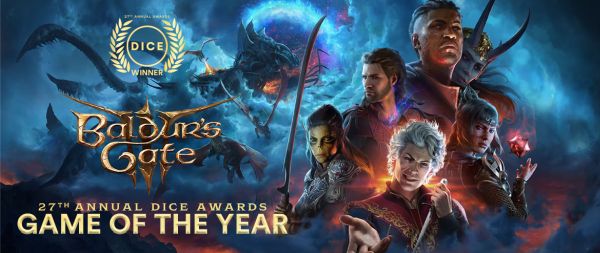
Baldur’s Gate 3 Stacks Up Another “Game of the Year” Award at the 2023-2024 DICE Awards

Continuing its momentum from The Game Awards, Larian’s Baldur’s Gate 3 won “Game of the Year” at last night’s DICE Awards. Unsurprisingly, the expansive RPG also won “Role-Playing Game of the Year”, as well as “Outstanding Achievement in Story”, “Outstanding Achievement in Game Design”, and “Outstanding Achievement in Game Direction”.

With five total awards, Baldur’s Gate 3 had a good night, but Spider-Man 2 doesn’t just do whatever a spider can, it also won six statuettes for Insomniac Games. The wallcrawler’s third Sony-published PlayStation outing collected “Action Game of the Year”, “Outstanding Achievement in Original Music Composition”, “Outstanding Achievement in Audio Design”, “Outstanding Achievement in Animation”, “Outstanding Technical Achievement”, and “Outstanding Achievement in Character” for Miles Morales.

More than a dozen other titles also claimed victory at this year’s DICE Awards, including Cocoon (“Outstanding Achievement for an Independent Game”), Diablo IV (“Online Game of the Year”), The Legend of Zelda: Tears of the Kingdom (“Adventure Game of the Year”), and Street Fighter 6 (“Fighting Game of the Year”).

Finally, Nintendo’s Koji Kondo took the stage last night as the latest recipient of the Academy of Interactive Arts & Sciences’s “Hall of Fame” award. It was a fitting tribute to the composer, especially on the same night that Super Mario Bros. Wonder, which he worked on as Sound Director, won the statuette for “Family Game of the Year”.

The 2023-2024 DICE Awards, which were hosted by Kinda Funny’s Greg Miller and IGN’s Stella Chung, was a fantastic showcase for the developers that made 2023 such a great year for games. You can watch the full ceremony, as well as view a list of every winner and nominee, after the break.

[Continue Reading…]

Guardian Faber Will Publish Keza MacDonald’s “Super Nintendo” in 2026

Keza MacDonald has been writing about video games for a long time. She is currently a Video Games Editor at The Guardian (as well as serving as the regular steward of their Pushing Buttons newsletter), and has previously written for Kotaku and IGN. MacDonald is also the co-author (with with Jason Killingsworth) of You Died: The Dark Souls Companion.

But for her next trick, she’ll be flying solo with Super Nintendo: How One Japanese Company Helped the World Have Fun, a new book all about Nintendo and why the company is “the key to understanding video games and what they do for us”:

Super Nintendo explores the cultural and social impact of video games through the franchises of Nintendo; the Japanese company is universally regarded as being the most influential in the industry, having produced landmark series such as Super Mario Bros., The Legend of Zelda and Pokémon.

Having exploded in popularity in recent years, video games are now the dominant cultural medium of the 21st century, adored by millions of people around the world. By telling the stories of these games – of those who made them and those who play them – MacDonald will provide readers with an unparalleled understanding of how and why Nintendo spreads the joy it does, revealing what our affection for games tells us about ourselves. In doing so, she speaks to that most human of desires: the desire to have fun.

MacDonald recently published a fantastic interview with Shigeru Miyamoto for The Guardian, so she’s clearly the right person for this topic.

Super Nintendo: How One Japanese Company Helped the World Have Fun will be published in the UK by Guardian Faber in Spring 2026. A worldwide release will presumably follow.

Puzzle Games Have Always Had Personality… Featuring Threes, Dr. Mario, Peggle, Tetris, and a Lot More

Wordle jumpstarted a new wave of addictive puzzle games after it was released to almost universal praise in 2020. Players found competition and comradery in those green and yellow squares during the COVID pandemic, and this little bit of personality continues to fuel the game’s popularity today.

But puzzle games have always had personality, and on the second anniversary of Wordle‘s acquisition by The New York Times, I decided to look back on an article I wrote for Warp Zoned in 2014 that argued exactly that. A lightly edited and updated version of that article has been reprinted here.

As video games begin to resemble film and television productions more and more with each passing generation, it’s interesting to observe that puzzle games continue to remain a vibrant genre.

[Continue Reading…]

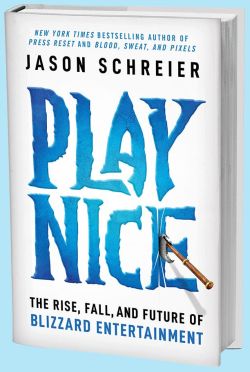
“Play Nice: The Rise, Fall, and Future of Blizzard Entertainment” is Coming from Jason Schreier on October 8, 2024

After releasing Blood, Sweat, and Pixels: The Triumphant, Turbulent Stories Behind How Video Games Are Made in 2017 and Press Reset: Ruin and Recovery in the Video Game Industry in 2021, investigative journalist Jason Schreier is getting ready to publish his next deep dive into the development side of video games.

Play Nice: The Rise, Fall, and Future of Blizzard Entertainment will explore Blizzard’s founding and its early years creating classics like Warcraft, Diablo, and StarCraft. But it’ll also tackle the company’s more recent woes as corporate intrigue surrounded its Irvine campus in the wake of its merger with Activision, as well as an examination of the sexual misconduct and discrimination lawsuits levied against the company, and Blizzard’s eventual acquisition by Microsoft in 2023.

[Continue Reading…]

“The Resties Required Reading List” Includes the 25 Games You Need to Play to Understand the History of Games

Justin McElroy, Griffin McElroy, Chris Plante, and Russ Frushtick host The Besties, a podcast where they talk about “the best game of the week” every week.
The Besties is part of the sprawling McElroy media empire, but episodes produced solely by the non-McElroy members of the show appear as a spinoff show known as The Resties, and for the last 18 months they’ve been sporadically adding games to “The Resties Required Reading List“.

Not a Best Games list, the “Required Reading List” is a collection of titles that serve as the best introduction to the wider world of video games, which Chris Plante likes to refer to as “a syllabus for Video Games 101”. He further described the project like this…

Our goal is to curate and contextualize a “must play” list of 25 games released between 1980 to 2020. These aren’t the best games or even our favorite games. They’re the games that should be experienced by everyone who wants a fundamental appreciation of the medium. They’re the games that will give you a richer connection with every other game you play.

Plante and Frushtick split the “Required Reading List” into eight episodes, each covering a five-year span that lands somewhere between 1980 and 2020. Within these smaller chunks of time they picked two-to-four games that best represent the era and a specific corner of gaming they wanted to highlight. In the end, 28 games made it through these mini-debates before the hosts cut three titles to reach their 25-game goal. Counter-Strike (from the 2000-2004 episode) ended up on the chopping block, as did Hearthstone and Spelunky HD (both appeared in the 2010-2014 episode).

So which games did make the grade? You’ll find all the foundational classics from the 1980s (Pac-Man, Tetris, Super Mario Bros., and The Legend of Zelda), as well as a smattering of modern games that are currently moving the needle on Best Games lists everywhere (Fortnite, The Legend of Zelda: Breath of the Wild, and Outer Wilds). In between there’s Doom (1993), Pokemon Red/Blue, Resident Evil 4 (2005), Minecraft, and more than a dozen others.

Wanting to argue with a Best Games list is the most natural reaction in the world, but it’s hard to quibble with any of the choices on “The Resties Required Reading List” as the games you need to play to best understand the history of games. Or, to steal a phrase from one of The Resties, the “Required Reading List” is a way of “thinking about the countless ways games inform our lives, our culture, and future creators”.

You can see all 25 games from “The Resties Required Reading List” after the break.

[Continue Reading…]

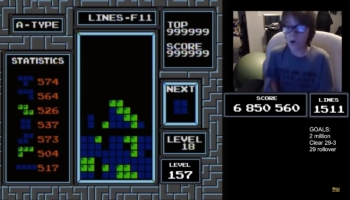
A Teenager “Beat” Tetris for the NES After Clearing 1,511 Lines

I’ll bet you thought it was impossible to “beat” Tetris on the NES… but that’s because your name isn’t Willis “Blue Scuti” Gibson.

Last month, the Tetris prodigy quite literally broke the game, clearing 1,511 lines before reaching the game’s never-before-seen kill screen. Blue Scuti is just 13 years old, and he’s part of a growing group of young players who have taken over the ranks of pro Tetris.

Blue Scuti and his peers are able to rack up such impressive line totals thanks to a strategy known as rolling. In rolling, the controller is pressed flat against your leg with your thumb hovering over the D-Pad. By tapping the back of the controller with your other hand, you can apply just enough pressure to the D-Pad to make pieces move across the screen (and where you want them to go to clear lines) at even the fastest levels.

While my own personal best of 214 lines is pretty decent for an amateur, Ars Technica explained how the pros are able to use rolling to push beyond the human limits found in a normal game of Tetris:

What makes Blue Scuti’s achievement even more incredible (as noted in some excellent YouTube summaries of the scene) is that, until just a few years ago, the Tetris community at large assumed it was functionally impossible for a human to get much past 290 lines. The road to the first NES Tetris kill screen highlights the surprisingly robust competitive scene that still surrounds the classic game and just how much that competitive community has been able to collectively improve in a relatively short time.

The whole world has come together to congratulate Blue Scuti, including Alexey Pajitnov, the creator of Tetris, and Henk Rogers, the developer who brought the game to the rest of the world in 1988. A surprise appearance from both men during Blue Scuti’s interview with NBC News gave the young player quite a shock.

Shortly after the new year, two other Tetris players also managed to reach the kill screen: Justin “Fractal161” Yu and Andy “P1xelAndy” Artiaga. Both regularly compete with Blue Scuti in tournaments around the country.

Blue Scuti’s record-setting playthrough was recently shared by Classic Tetris World Championship, and it’s been embedded above. He dedicated this accomplishment to his father, Adam Gibson, who passed away on December 14.

David Craddock Will Explore the Many Ports of Doom for Boss Fight Books in “But Does It Run Doom?”

John Carmack, John Romero, Tom Hall, Adrian Carmack, and Sandy Petersen changed everything when they released Doom in 1993. It wasn’t the first first person shooter (nor was id Software’s earlier game, Wolfenstein 3D), but it defined what the genre would look like for years to come and led to a stampede of “Doom Clones” that continue to be produced to this very day.

Even after writing all that out, it’s still hard to believe… Doom is 30 years old.

David Craddock, the author behind Stairway to Badass: The Making and Remaking of Doom 2016 and Rocket Jump: Quake and the Golden Age of First-Person Shooters, recently moderated a discussion between Romero and Carmack that has been embedded above. The two developers touched on a lot of interesting topics as part of the anniversary celebration, and at the end, Craddock revealed that he’s cooking up another Doom-adjacent project for release in the not-too-distant future.

The author will work with Boss Fight Books to publish But Does It Run Doom?, an exploration of the many ports (both official and unofficial) that have been based on the seminal shooter. Here’s what he had to say about the new book, including a promise that it’ll also delve into some of the very weird machines Doom has appeared on…

These guys have graciously allowed me to insert a quick plug for a project I have coming out and it’s in the vein of what we’ve been talking about.

I’m partnering with Boss Fight Books to release a book called But Does It Run Doom? I’ll be writing about some of the conventional ports such as the Super Nintendo [and] PlayStation, but also some of the more out-of-leftfield ports such as on pregnancy tests, on the sheep in Minecraft

So look for that on @BossFightBooks on Twitter [and] BossFightBooks.com. [They’ll] have information coming out.

This is somewhat of a departure for Book Fight Books, but hopefully that means they’ll have more to say about But Does It Run Doom? soon.