“The Resties Required Reading List” Includes the 25 Games You Need to Play to Understand the History of Games

Justin McElroy, Griffin McElroy, Chris Plante, and Russ Frushtick host The Besties, a podcast where they talk about “the best game of the week” every week.

The Besties is part of the sprawling McElroy media empire, but episodes produced solely by the non-McElroy members of the show appear as a spinoff show known as The Resties, and for the last 18 months they’ve been sporadically adding games to “The Resties Required Reading List“.

Not a Best Games list, the “Required Reading List” is a collection of titles that serve as the best introduction to the wider world of video games, which Chris Plante likes to refer to as “a syllabus for Video Games 101”. He further described the project like this…

Our goal is to curate and contextualize a “must play” list of 25 games released between 1980 to 2020. These aren’t the best games or even our favorite games. They’re the games that should be experienced by everyone who wants a fundamental appreciation of the medium. They’re the games that will give you a richer connection with every other game you play.

Plante and Frushtick split the “Required Reading List” into eight episodes, each covering a five-year span that lands somewhere between 1980 and 2020. Within these smaller chunks of time they picked two-to-four games that best represent the era and a specific corner of gaming they wanted to highlight. In the end, 28 games made it through these mini-debates before the hosts cut three titles to reach their 25-game goal. Counter-Strike (from the 2000-2004 episode) ended up on the chopping block, as did Hearthstone and Spelunky HD (both appeared in the 2010-2014 episode).

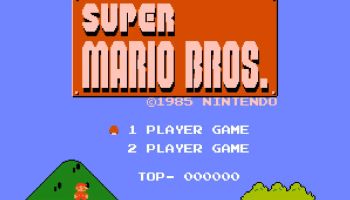
So which games did make the grade? You’ll find all the foundational classics from the 1980s (Pac-Man, Tetris, Super Mario Bros., and The Legend of Zelda), as well as a smattering of modern games that are currently moving the needle on Best Games lists everywhere (Fortnite, The Legend of Zelda: Breath of the Wild, and Outer Wilds). In between there’s Doom (1993), Pokemon Red/Blue, Resident Evil 4 (2005), Minecraft, and more than a dozen others.

Wanting to argue with a Best Games list is the most natural reaction in the world, but it’s hard to quibble with any of the choices on “The Resties Required Reading List” as the games you need to play to best understand the history of games. Or, to steal a phrase from one of The Resties, the “Required Reading List” is a way of “thinking about the countless ways games inform our lives, our culture, and future creators”.

You can see all 25 games from “The Resties Required Reading List” after the break.
[Continue Reading…]

Koji Kondo’s “Super Mario Bros. Theme” Added to the National Recording Registry by the Library of Congress

The Library of Congress is still dragging their feet on formally adopting Henry Lowood’s Game Canon proposal, but that didn’t stop the institution from including a piece of music from a video game for the first time as part of the National Recording Registry’s Class of 2023.

While a case could certainly be made for “Korobeiniki” from Tetris, this honor actually belongs to Koji Kondo’s “Super Mario Bros. Theme,” which was selected for the list by the National Recording Preservation Board. Alongside the rest of this year’s inductees, the board believes that the recording (officially known as the “Ground Theme”) is a perfect example of an “audio treasure worthy of preservation for all time based on its cultural, historical or aesthetic importance.”

The tune was originally released in 1985 alongside Super Mario Bros., and the Library of Congress believes that it is “perhaps the most recognizable video game theme in history.” It’s hard to argue with that assessment, or with its description as a “jaunty” piece of music with a “Latin-influenced melody.”

It’s hard to believe that Koji Kondo was just 23 years old when he created this iconic theme, and he seems genuinely touched by its inclusion in the National Recording Registry:

“The amount of data that we could use for music and sound effects was extremely small, so I really had to be very innovative and make full use of the musical and programming ingenuity that we had at the time,” he said through an interpreter in a recent interview. “I used all sorts of genres that matched what was happening on screen. We had jingles to encourage players to try again after getting a ‘game over,’ fanfares to congratulate them for reaching goals, and pieces that sped up when the time remaining grew short.”

[…]

“Having this music preserved alongside so many other classic songs is such a great honor,” he said. “It’s actually a little bit difficult to believe.”

The “Super Mario Bros. Theme” will be inducted into the National Recording Registry this year alongside a lot of other great music, including “Imagine” by John Lennon, “Stairway to Heaven” by Led Zeppelin, “Take Me Home, Country Roads” by John Denver, “Margaritaville” by Jimmy Buffett, “Sweet Dreams (Are Made of This)” by Eurythmics, Like a Virgin by Madonna, and “All I Want for Christmas is You” by Mariah Carey.

Bite-Sized Game History: Disc Room’s Future History, 007 Blood Stone’s Economic Box Art, and Super Mario 64’s Wild Manga

Surprise… Surprise…

Today’s Bite-Sized Game History is all about the strange little surprises you stumble across when you’re exploring where a game came from. Those surprises can be a clever bit of programming, an economical bit of marketing, or an absolutely wild adaptation of a game that you thought you knew everything about.

Find out which is which after the break.

[Continue Reading…]

Speedrunner Niftski Sets New “Any Percentage” World Record of 4:54.798 for Super Mario Bros.

The speedrunners attempting to bend Super Mario Bros. to their will continue to inch closer to completing a perfect run. Niftski, the current recordholder for an “Any Percentage” completion of the game, bested his own mark yesterday.
The speedrunner shaved a few frames off his previous time to set a new World Record of four minutes and 54.798 seconds. You can watch the entire thing, which includes a variety of nigh-impossible glitches and warps to save time, right here:

Niftski’s main competition for the Super Mario Bros. crown is Miniland, and the two speedrunners have been locked in a back-and-forth battle for the right to claim the World Record for the better part of two years.

Miniland set the initial pace in February 2021 with an “Any Percentage” completion time of four minutes and 55.23 seconds. Niftski answered two months later with his own time of four minutes and 54.948 seconds.

Miniland roared back in November by completing Super Mario Bros. in just four minutes and 54.914 seconds, but Niftski has been in control of the World Record in the months since after posting a time of four minutes and 54.881 seconds in December.

Both speedrunners are chasing the chance to complete a perfect run of Super Mario Bros., which is currently pegged at four minutes and 54.265 seconds. Known within the speedrunning community as a Tool Assisted Speedrun (TAS), this time is generated by a program that stitches together the individual frames that comprise the optimal path through the game.

Niftski and Miniland post updates on their progress to YouTube, so be sure to follow them to see who will improve upon the record (and get closer to perfection) in the future.

Bite-Sized Game History: Revisiting Journey’s Development Journey, the Origins of Scorpion’s Spear, and Making Mario’s Red Hat

When you’re developing a video game, you have to be ready for inspiration to strike at any time.
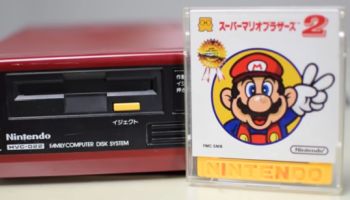
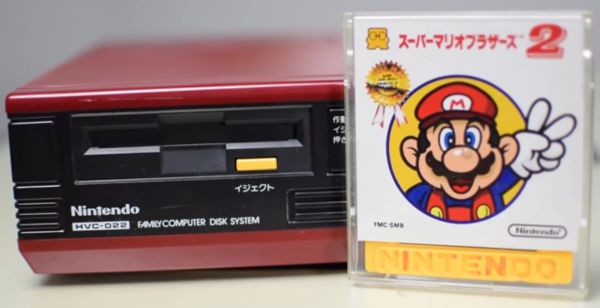
For this edition of Bite-Sized Game History, let’s look back at how some of the most iconic moments from Journey, Mortal Kombat, and Super Mario 64 went from the drawing board to the screen…

[Continue Reading…]

Three Mini-Documentaries for Mario Day

It’s March 10th, which can also be written as MAR-10, which means that it’s Mario Day, an annual celebration of Nintendo’s mustachioed plumber.

Like Disney and Star Wars Day, the consolemaker has embraced this fan-driven holiday, and it’s likely that some kind of major announcement will happen later today (the smart money is on the first trailer for the upcoming Super Bros. Mario movie).

But you need to get into the proper headspace to truly enjoy the holiday, so sit back and enjoy this trio of mini-documentaries about the man they call Mario.

[Continue Reading…]

See the Bracket (and Winner) for IGN’s “Best Video Game of All Time” Tournament

IGN’s editors and contributors have produced multiple Best Games lists over the last 20 years (the most recent, the “Top 100 Video Games of All Time,” was published in 2019), but they’re doing something a little different with their “Best Video Game of All Time Bracket.”
Beginning today, IGN’s readers will guide the process by voting in a March Madness-style tournament that features 64 of “the very best” games, as selected by IGN staff.

To build the bracket, games were sorted randomly into four different regions, and then seeded by IGN’s editors. Rockstar’s Red Dead Redemption, Valve’s Portal 2, Nintendo’s Super Mario World, and Nintendo’s Super Metroid were the #1 seeds in each region, but voters will have to make some hard choices in this first round.

I mean, how do you choose between The Legend of Zelda: Ocarina of Time and The Elder Scrolls V: Skyrim? Or Halo 2 and Mass Effect 2? Or Street Fighter II and Pokemon Yellow? Or The Legend of Zelda: Breath of the Wild and Final Fantasy VII?

Let’s take a look at the full seeding…

[Continue Reading…]

Wata Games, Heritage Auctions, and the Suspected Fraud at the Center of the Graded Games Market

The market for retro games has exploded exponentially in the last few years, with the record for the price paid for a single game rising steadily from just over $30,000 in July 2017 to $114,000 in July 2020, $660,000 in April 2021, and $1,560,000 in July 2021. Earlier this month the record climbed again to $2,000,000.

It would be easy to chalk this phenomenon up to an aging base of collectors ready to spend their hard-earned dollars on something they could never obtain as children. After all, you saw the same thing with comic books and baseball cards in the 1980s and 1990s.

But something else might be going on here…

[Continue Reading…]

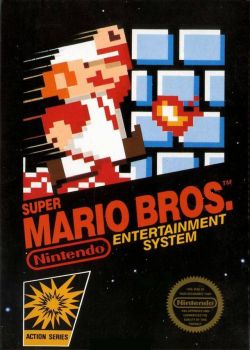
Rally, a “Stock Market for Collectibles,” Sells Their Copy of Super Mario Bros. for $2 Million

Rally, a “stock market of collectibles,” made a splashy entrance into the world of high-value game collecting during the Summer of 2020 when they purchased a sealed and graded copy of Super Mario Bros. for $140,000.

After acquiring the game (which received a 9.8 A+ grade from Wata Games), the company sold 3,000 “shares” in the collectible cartridge to investors for $50 apiece

Rally’s $140,000 purchase set a record for a single game sale at the time, but it’s been eclipsed multiple times in the past year, including twice just in the last month. That’s when this merry-go-round of motivated sellers and deep-pocketed buyers culminated in sales of $870,000 (for a copy of The Legend of Zelda) and $1.56 million (for a copy of Super Mario 64).

But now Rally gets to sit on the top of the mountain for a little while, and that’s because the game’s shareholders have decided to sell their copy of Super Mario Bros. for $2 million to a private collector:

According to The New York Times, each shareholder will receive roughly $475 per share after the sale is completed. That’s honestly a pretty great return on their initial investment.

A Copy of id Software’s PC Port of Super Mario Bros. 3 Has Been Donated to the Strong Museum

David Kushner meticulously detailed the story of id Software’s founding in 2003’s Masters of Doom, tracking the legendary development team’s history back through the creation of Wolfenstein 3D and Doom. But before all that, John Carmack and John Romero approached Nintendo with the idea of releasing Super Mario Bros. 3 for the PC.

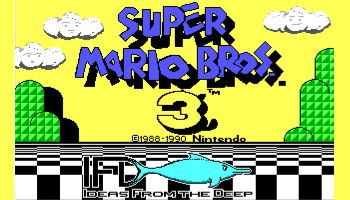
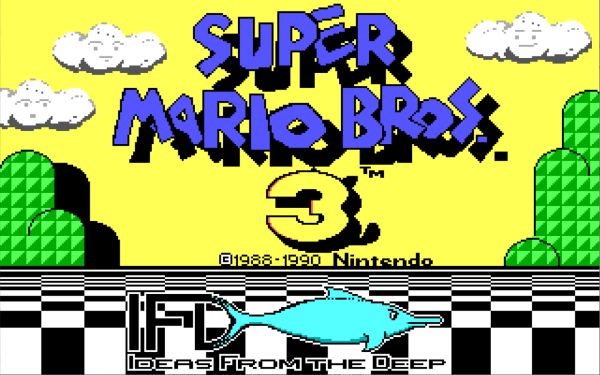
Nintendo’s signature brand of platforming wasn’t possible on the underpowered PCs of the time, but Carmack cracked the code in 1990 with the creation of his “smooth scrolling” engine. Sensing that this was a very big deal, the team (then known as IFD: Ideas from the Deep) got to work producing a prototype to show Nintendo:

Over those seventy-two hours, they fell into crunch mode. […] They got the game down to a T: Mario’s squat little walk, the way he bopped the animated tiles, sending out the coins, the way he leapt on the turtles and kicked their shells, the clouds, the Venus’s-flytraps, the pipes, the smooth scrolling. By the time they finished, the game was virtually identical to the bestselling hit in the world. The only noticeable difference was the title screem, which, under the Nintendo copyright, credited the makers, a company name the guys borrowed from Romero and Lane, Ideas from the Deep.

Unsurprisingly, Nintendo rejected the demo, but the new technology inspired IFD to create their own game, Commander Keen, and adopt the more familiar id Software moniker a year later.

According to Kushner, the developers eagerly shared their adaptation of Super Mario Bros. 3 with friends and collaborators as they worked on Commander Keen, and in 2015, Romero gave us a peek at what could have been when he uploaded a short playthrough of the prototype to his Vimeo channel:

Even though it was apparently distributed far and wide, this important piece of PC gaming history stayed hidden for more than 30 years. But a new report on Ars Technica has revealed that a floppy disk containing id’s Super Mario Bros. 3 prototype was recently donated to the Strong Museum of Play in Rochester, NY.

The Strong Museum, which also operates the International Center for the History of Electronic Games (ICHEG) and the World Video Game Hall of Fame, said they will make the prototype available to historians and researchers upon request. There’s also the possibility that it could find its way into a public exhibit in the future.

My only question is, what happens when you type in “IDDQD”?